
CHATTERBOX QUILTS’ BLOG
Helping Quilters Learn and Improve
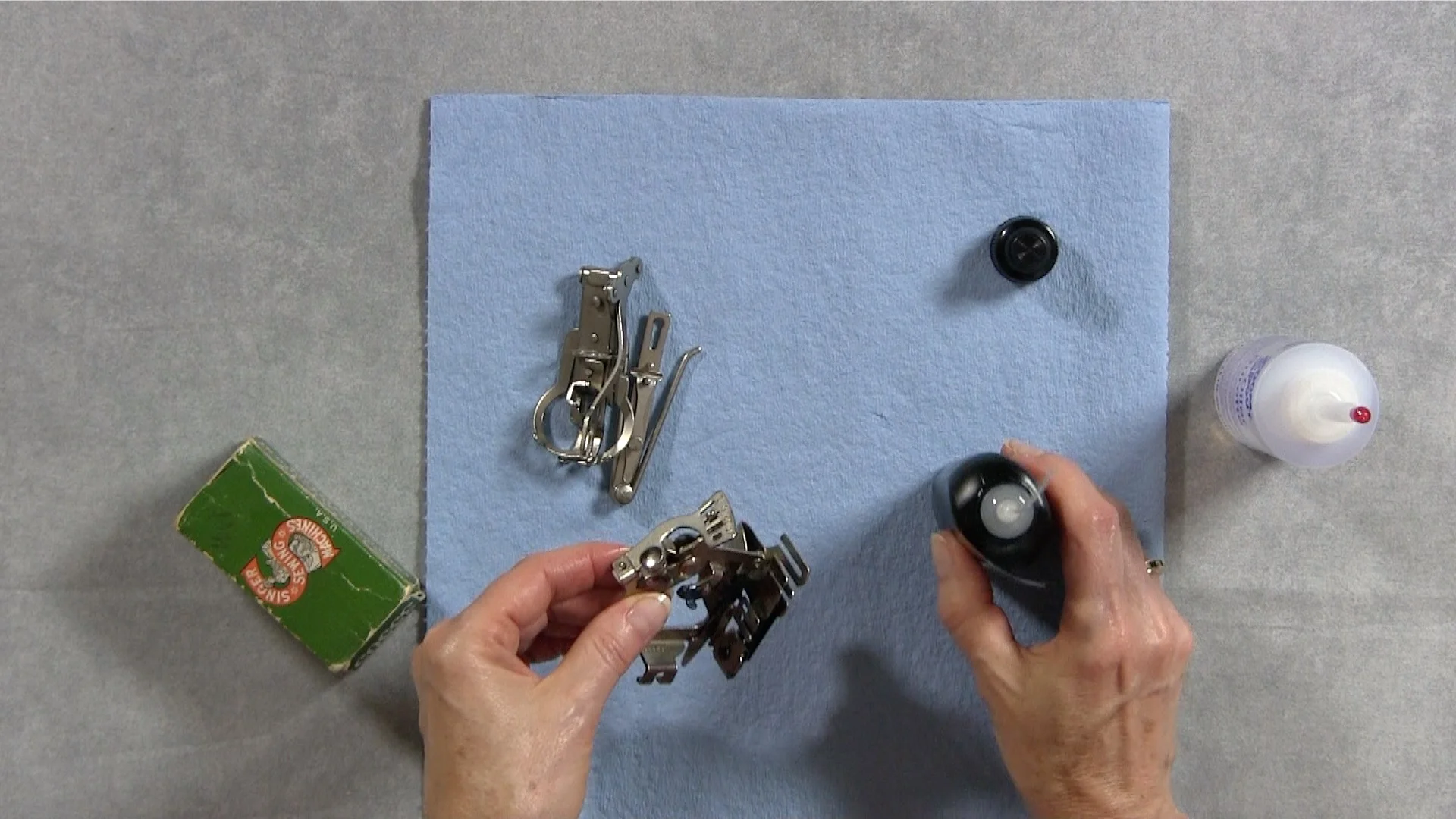
How to Oil Vintage Sewing Machine Attachments
Your vintage sewing machine may've come with some strange looking feet, or attachments, as they were referred to in the machine manuals. While some of these are quite similar to modern feet, such as the regular pressing foot, others, such as the ruffler, appear more exotic. Some sewists have trouble stitching with these more complicated feet and one of the reasons may be that the foot needs to be oiled. Yes, feet sometimes do need to be oiled!
Your vintage sewing machine may've come with some strange looking feet, or attachments, as they were referred to in the machine manuals. While some of these are quite similar to modern feet, such as the regular pressing foot, others, such as the ruffler, appear more exotic.

Your ruffler will behave better once you've oiled it.
Some sewists have trouble stitching with these more complicated feet and one of the reasons may be that the foot needs to be oiled. Yes, feet sometimes do need to be oiled!
In this video, I'll show you how to oil some of these attachments to help make your sewing with them easier.
You can watch the video below.
If you are thinking of buying a vintage sewing machine you may be interested in my eBooks for buyers (click here). If you are thinking of selling your machine you may be interested in my How To Sell a Vintage Sewing Machine eBook.
Creatively,

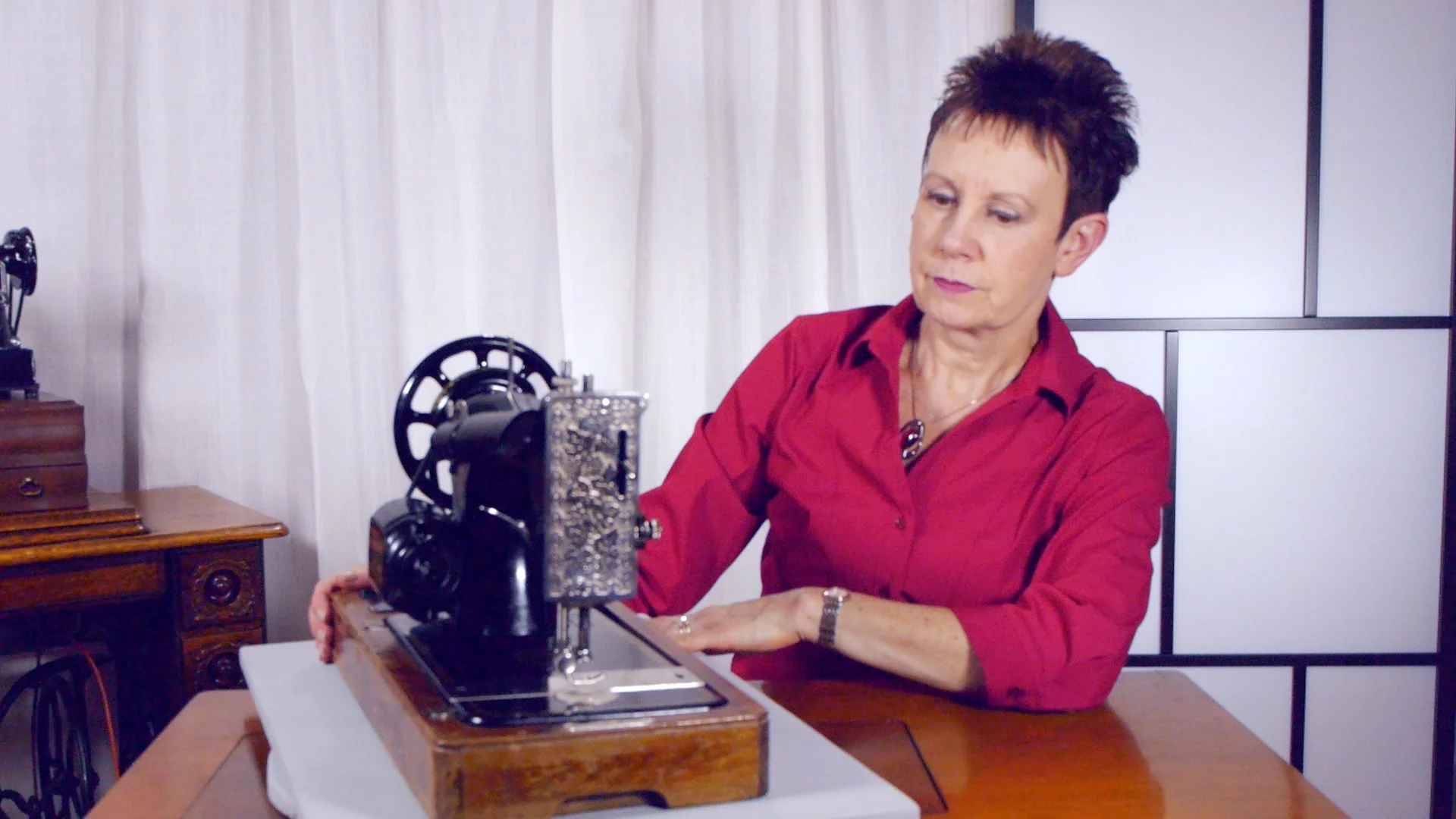
Singer 128 Sewing Machine
Usually when I'm looking for a vintage sewing machine I have a list of requirements: wires in good shape, runs okay, decals not worn, etc. I recently bought a Singer 128 sewing machine that didn't have any of these qualifications. Why did I buy a sewing machine that had wiring so bad I couldn't even tell if it ran? Watch the video below to find out.
Usually when I'm looking for a vintage sewing machine I have a list of requirements: wires in good shape, runs okay, decals not worn, etc. I recently bought a Singer 128 sewing machine that didn't have any of these qualifications. Why did I buy a sewing machine that had wiring so bad I couldn't even tell if it ran? Watch the video below to find out.
If you can't see the video below.
If you are thinking of buying a vintage sewing machine you may be interested in my eBooks for buyers (click here). If you are thinking of selling your machine you may be interested in my How To Sell a Vintage Sewing Machine eBook.
Creatively,

Thread Tension on the Janome Horizon Memory Craft 8900 Sewing Machine
I recently had one of my Youtube viewers ask for help with the thread tension on her Janome Horizon Memory Craft 8900 QCP, one of the sewing machines I also own.

She was trying to sew a straight seam and her machine was skipping stitches. In case you may also have this problem with your machine, here are some suggestions (the instruction manual pages refer to this specific model of Janome sewing machine):
First, get out your sewing machine's instruction manual - you're going to need it!
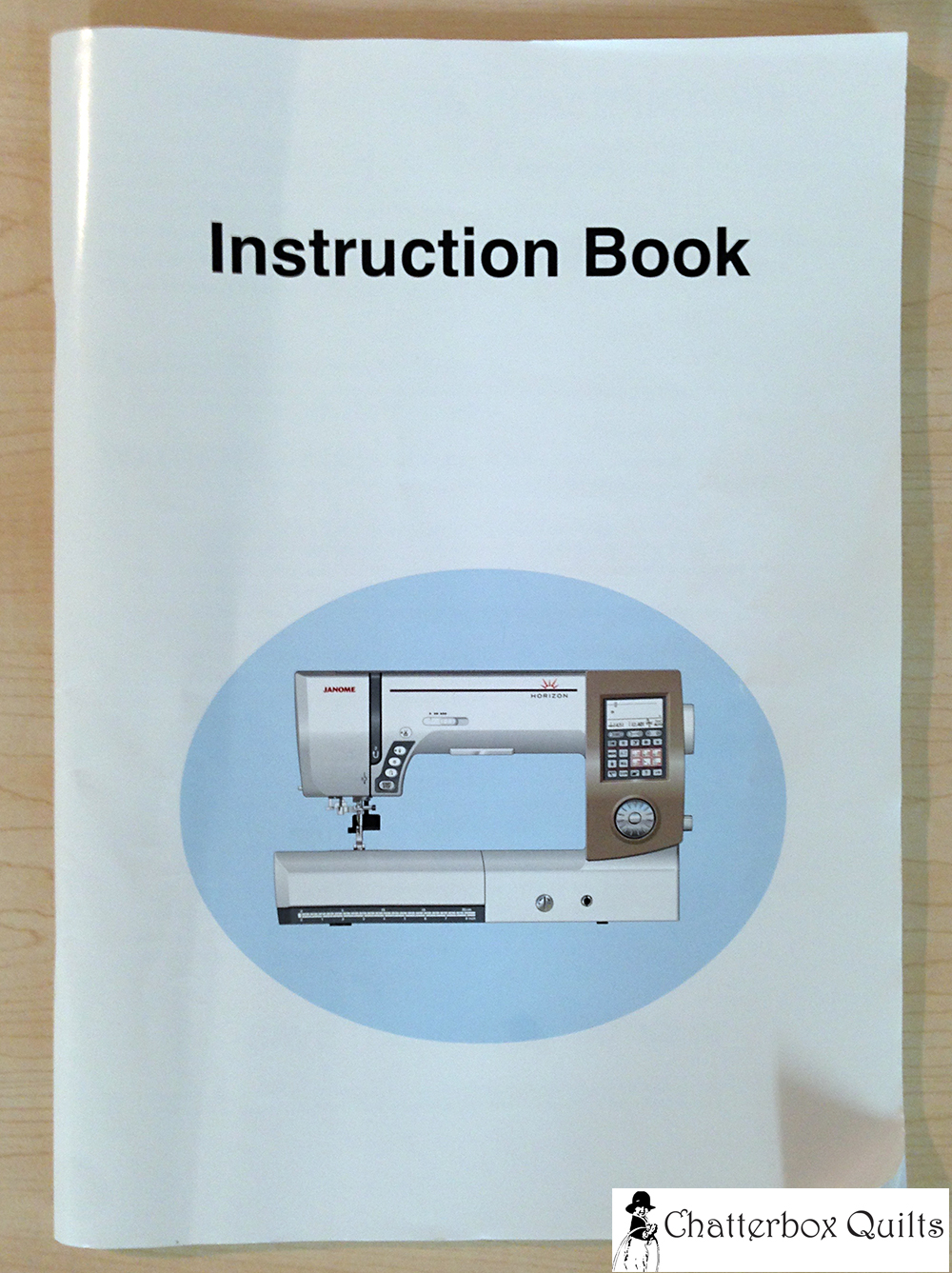
You should always have your sewing machine's manual close at hand.
Let’s start at the beginning - winding the bobbin. The bobbin needs to be tightly wound as a loosely wound bobbin can cause problems. When winding the bobbin, ensure that you are running the machine at top speed - move the speed control slider over to the far right (see p. 8 in your manual). This will help to wind the bobbin tightly. Be sure that you are following the correct thread path when winding the bobbin (see p. 19 in your manual). You want to ensure that the thread stays in this thread path as you are winding the bobbin as sometimes it can slip out and this will result in uneven bobbin winding. If you’ve done this and are confident that the bobbin is wound tightly, …

Pretty blue Janome bobbins
Check to ensure that you have put the bobbin in the machine correctly. For this model of the Janome, the bobbin should be inserted counterclockwise (see p. 20 in your manual).
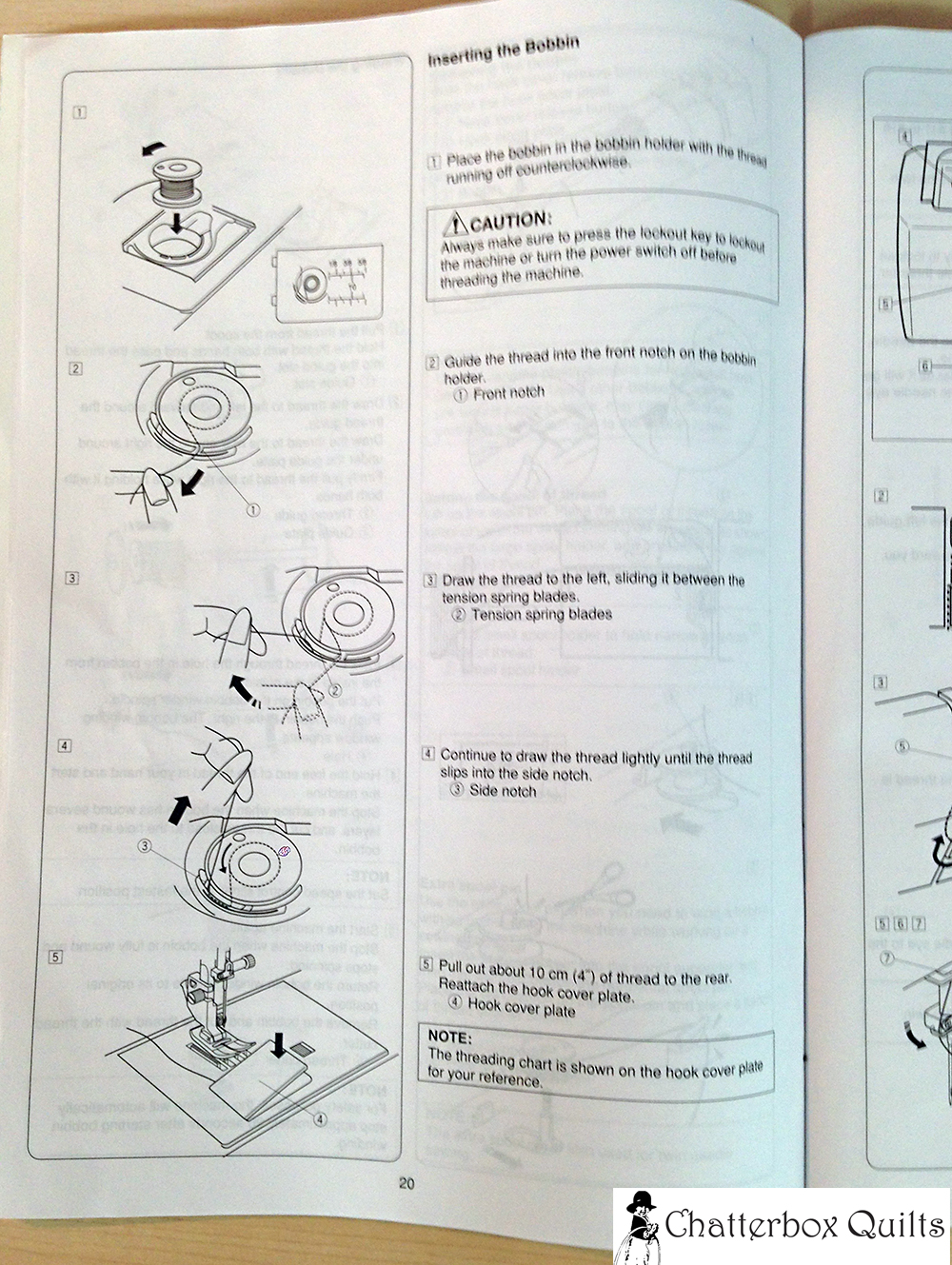
Check your manual for the correct way to insert the bobbin.
I have several machines and always have to check this out as the bobbins in some machines go in one way and some the other, so just be sure that the bobbin is in the correct way for your specific sewing machine. For my model of Janome the thread fits into the front notch in the bobbin holder and goes to the left into the side notch. Again, if the thread isn’t catching in all these areas, this will cause tension problems.

Ensure that the bobbin is inserted correctly - the thread runs off counterclockwise for my Janome
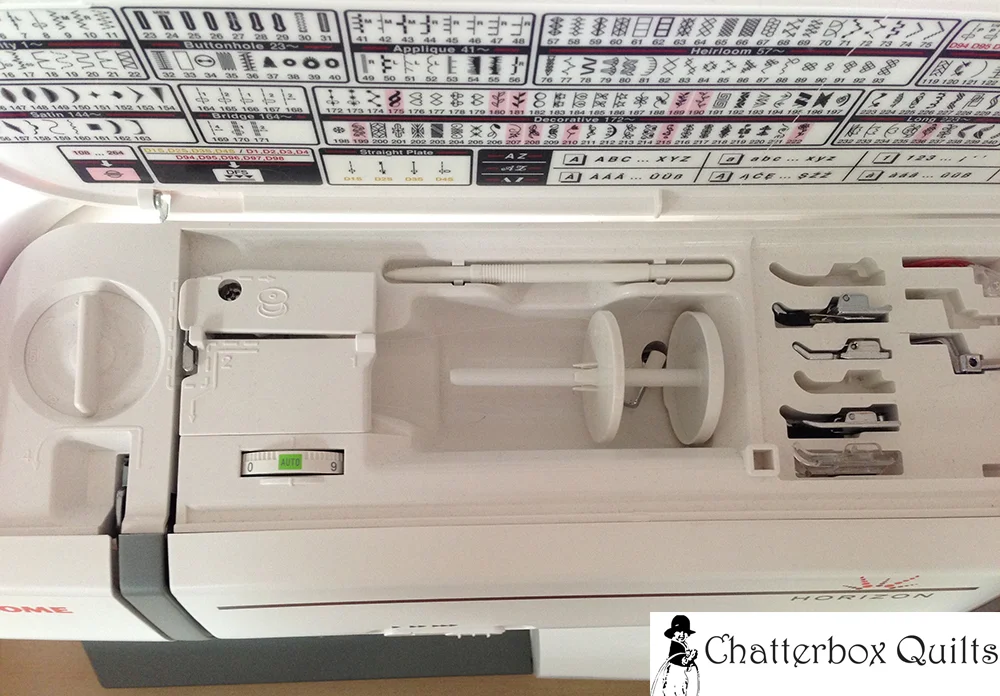
I’m not sure if you’re using the same thread in the top of the machine as in the bobbin. If you are, the thread tension dial should be set to “Auto”. If you are using two different weights/types of thread, you may have to change the tension to either higher or lower (see page 12 in your manual).

Check and adjust your thread tension, if needed.
Next I would check to ensure that your top thread is correctly threaded. Again, it’s easy to miss one of these areas or the thread can sometimes pop out and this causes problems.

Do you know your sewing machine's thread path? If not, check your instruction manual.
Check page 21 in your manual to ensure that the top thread is correctly threaded. Remember to raise the presser foot when threading the machine and have the needle at the highest position. Threading the machine with the presser foot down can result in improper thread tension.
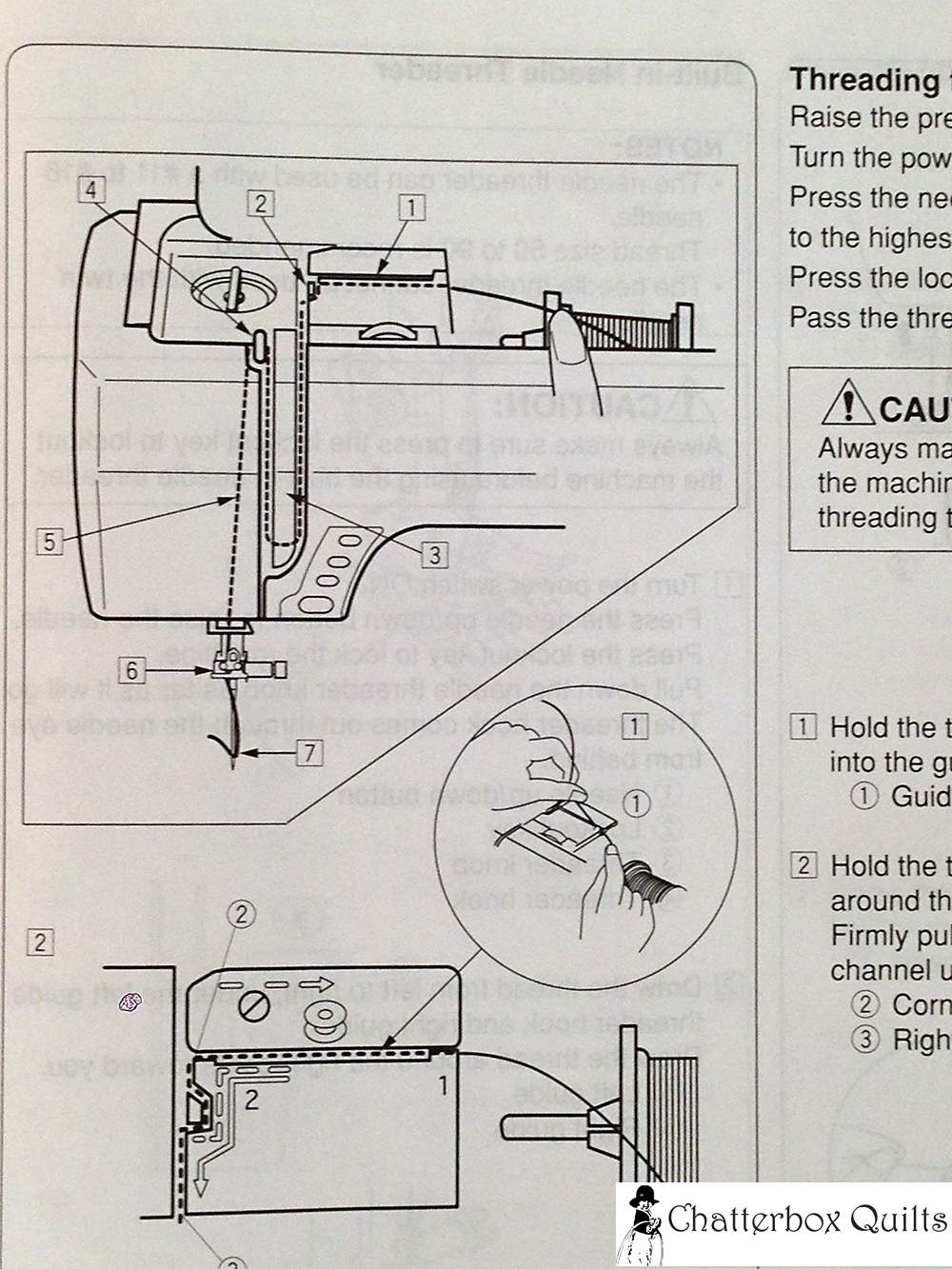
Check your instruction manual for the proper way to thread your sewing machine.
Changing the needle can sometimes help as well. Again, ensure that you are using the correct needle size for the thread you are using. I usually use an 80/12 or 90/14 in the machine and haven’t had any problems. You can check for the appropriate needle size on page 17 of your manual.
You can also try cleaning out the bobbin area to ensure that there isn’t any lint or stray threads that are causing the problem. See page 101 in your manual to see how to take out the bobbin case and clean the area. Take a good look at how the bobbin case is installed before removing it as it has to go back in a certain way to work properly. There is also a screw on the bobbin case that you’ll see when you take it out. If the thread is running out of the bobbin case too quickly, you may need to tighten the screw. If you can’t get it to come out at all, you may have to loosen it a bit. Check out this blogpost to see what I mean.

Take out the bobbin and clean the bobbin area after each project.
I hope that some of these steps help you with the thread tension. If you are still not able to get the tension the way you want it, I would suggest calling up your local Janome dealer and they should be happy to help you out.
Download the free Get Out of the Ditch! guide to learn how to start free motion quilting by clicking here.
Off the Power Grid and into "Me" Power
I have been looking for a nice treadle cabinet and a Singer 66 Red Eye (or Red Head) sewing machine for some time and lucky for me, I found them both in one package! Even better, I didn't have to travel hours (as I've been know to do) to get this machine and its cabinet as they were right here in Calgary.
My most recent vintage sewing machine acquisition was a bit of a departure for me. I opted for a non-electric vintage sewing machine. If you know vintage machines, you know this means either a hand crank or a treadle sewing machine. Guess which one I got? Yes, I purchased a treadle sewing machine.

The cabinet for my Singer 66 red eye sewing machine - before clean up (white spots are no longer there!)
I have been looking for a nice treadle cabinet and a Singer 66 Red Eye (or Red Head) sewing machine for some time and lucky for me, I found them both in one package! Even better, I didn't have to travel hours (as I've been know to do) to get this machine and its cabinet as they were right here in Calgary.

Slightly worn decals on the sewing machine
When I went to check out the machine and cabinet, I was more interested in the cabinet than the machine as I'd read that it can be harder to get a nice treadle cabinet. Machines can be switched in and out of cabinets, but these older cabinets can be very hard to find in my part of the country.

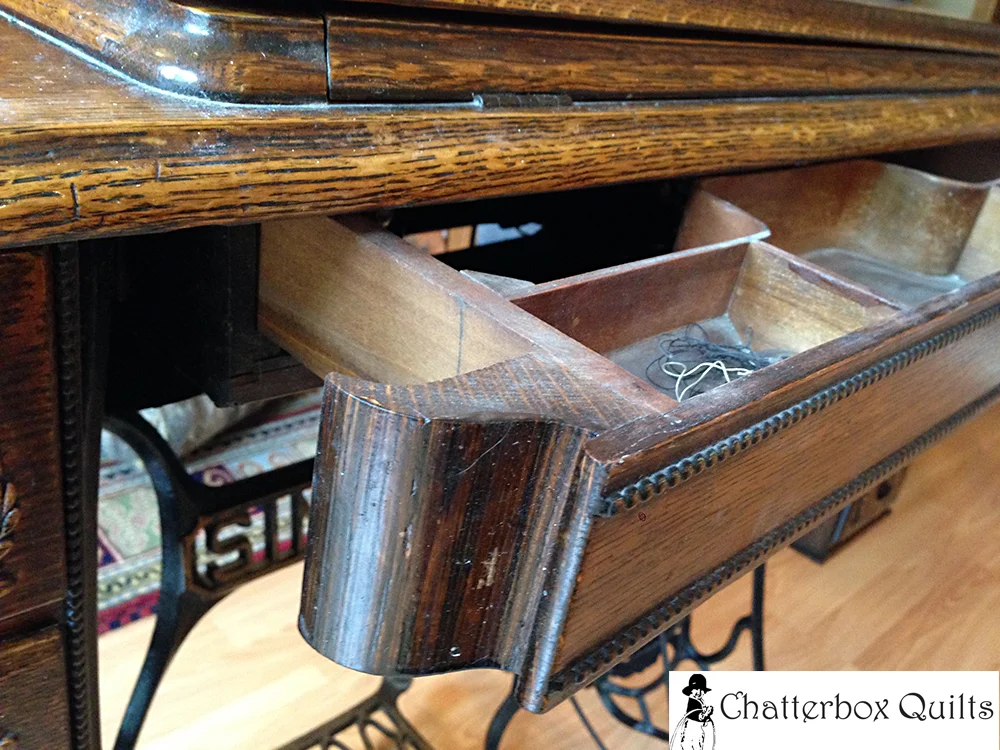
Drawer detail
When I got to the seller's house, I dealt with her husband as she wasn't at home. I managed to talk him down as to the price and hopefully didn't get him in too much trouble with his wife for doing so! He kindly helped us to remove the machine from the cabinet and helped load it into the Zoocrew (that would be our Honda Odyssey van).

If you check the serial number, you'll see that this machine is at least 100 years old!
If you don't know about this model, let me tell you a bit about it.
According to the Singer website:
"The Singer 66 or 66K was a heavy duty domestic sewing machines that set the standard for several decades, and indeed the Class 66 bobbin and the 66 style rotary hook arrangement are still in use on many ‘new’ sewing machines today. Because the 66K’s were full size machines weighing around 30lbs, they were usually sold in treadle tables or cabinets, although some hand cranked models, and later on some electric models, were also sold. The 66K first introduced the horizontally mounted rotary hook arrangement with drop in bobbins. A system which still survives in so many sewing machines from all makers today."

Getting ready to clean the machine.
The earlier models had back clamping attachments, which is what mine has (it was made around 1915). These can be changed so they can handle vintage side clamping attachments, but I haven't done anything about that yet.

Back clamping attachments (feet) on this model of the Singer 66
The advantage of the 66 model is the large harp space - which makes it great for quilting. The drawback is that there is no reverse and the feed dogs don't drop, although these can be covered with a plate for free motion quilting or darning (but who wants to darn clothing anyway?!).
The 66 Red Eye model of the Singer 66 sewing machine was produced in America and is quite colourful.
The decals on my particular machine are not in as good a shape as some that I've seen, as you can tell from the photos. Even with lots of cleaning, you can see that the decals just aren't there anymore. Sometimes they may be hiding under a layer of grime, but this wasn't the case with my machine.

The decals on my machine are worn, but everything else on the machine seems great.
On the plus side, the chrome parts are in very good shape with no rust.

Face plate is beautifully ornate - but needs cleaning!
You can see the difference between one of the chrome plates that is only partially cleaned. Initially it was very dark, but with lots of elbow grease and metal cleaner, the silver began to show through. It's always amazing to me how these machines clean up with simple cleaners, time and some scrubbing.

See how dirty the chrome pieces were on this machine when I got it? Definitely need some elbow grease on these parts!
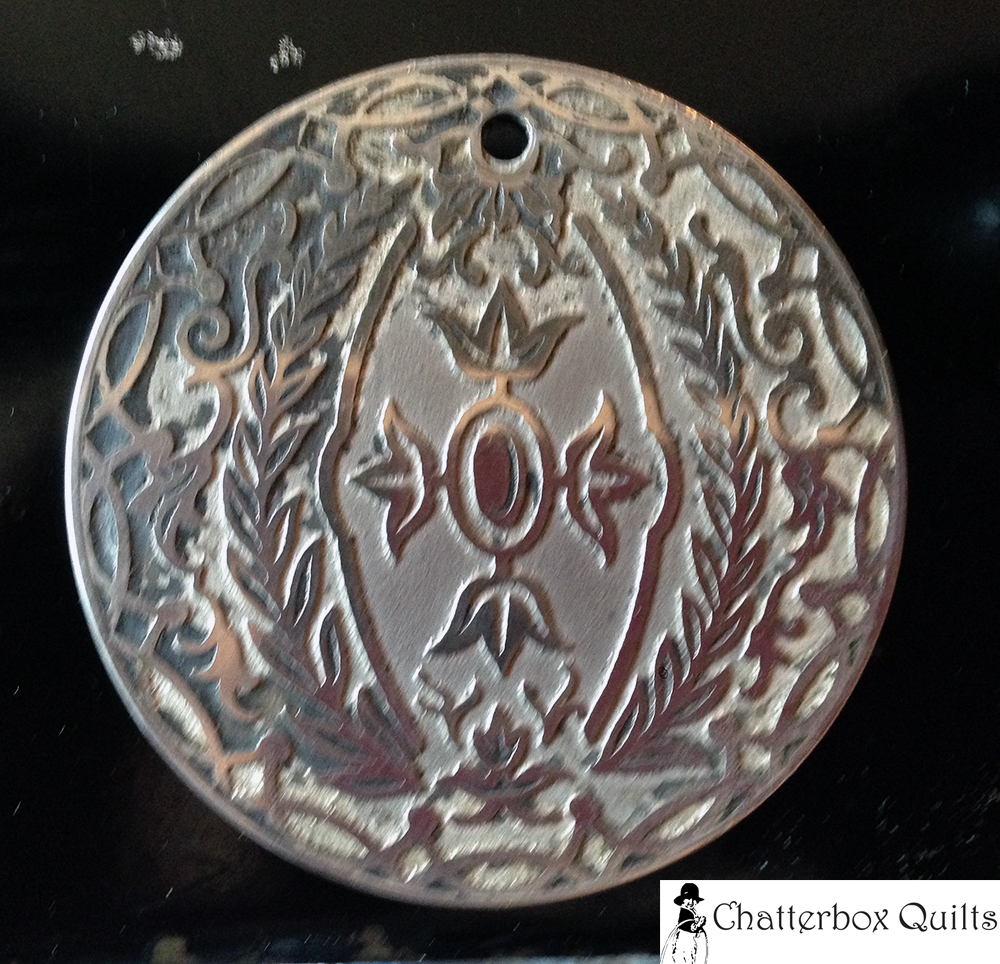
One of the chrome pieces partially cleaner - note the unclean, dark areas.
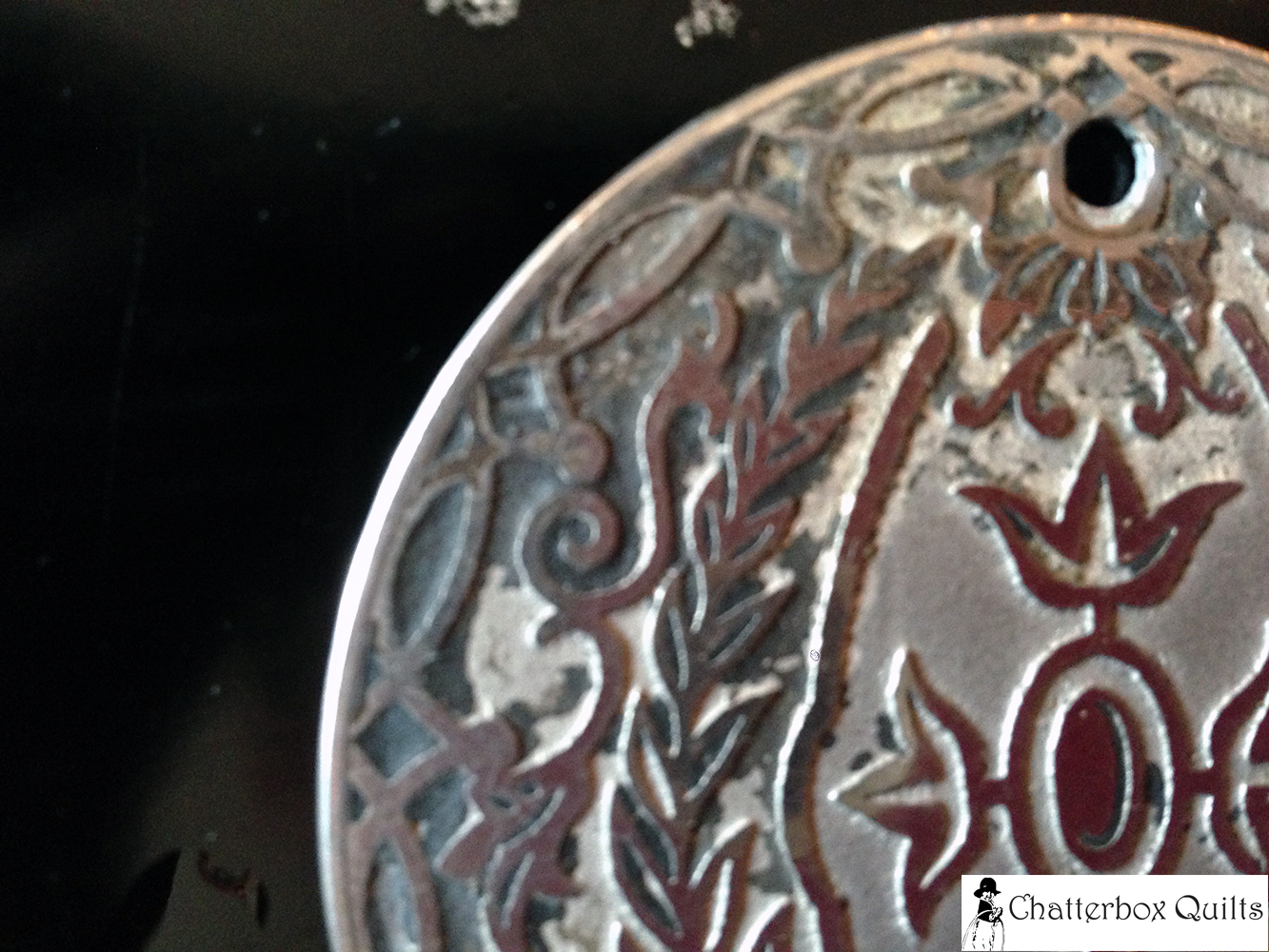
Still needs a bit more cleaning. I had to use a toothpick to get all the black grime out.
The cabinet had a few water marks on the top, but I easily removed these with Howard Products' Restor-A-Finish and steel wool. I then protected the cabinet with their Feed-N-Wax product.
If you'd like to see a bit more about my particular Singer 66 sewing machine, please watch the video below or view it on my Youtube channel.
Subscribe to my course, The Joy of Vintage Sewing Machines (at a 20% discount) to see how I clean up and repair my vintage machines. I'll walk you through all the steps of evaluating, acquiring and rejuvenating vintage sewing machines.
Now that I've got my first treadle sewing machine, I guess I'll be able to treadle any time, even if the electricity is off - after I learn how to treadle, that is!
Do you have a treadle sewing machine or other vintage machine? Send me your photos of them and remember to check out The Joy of Vintage Sewing Machines on Curious.
Creatively,

A Card Table for Featherweight Sewing Machines
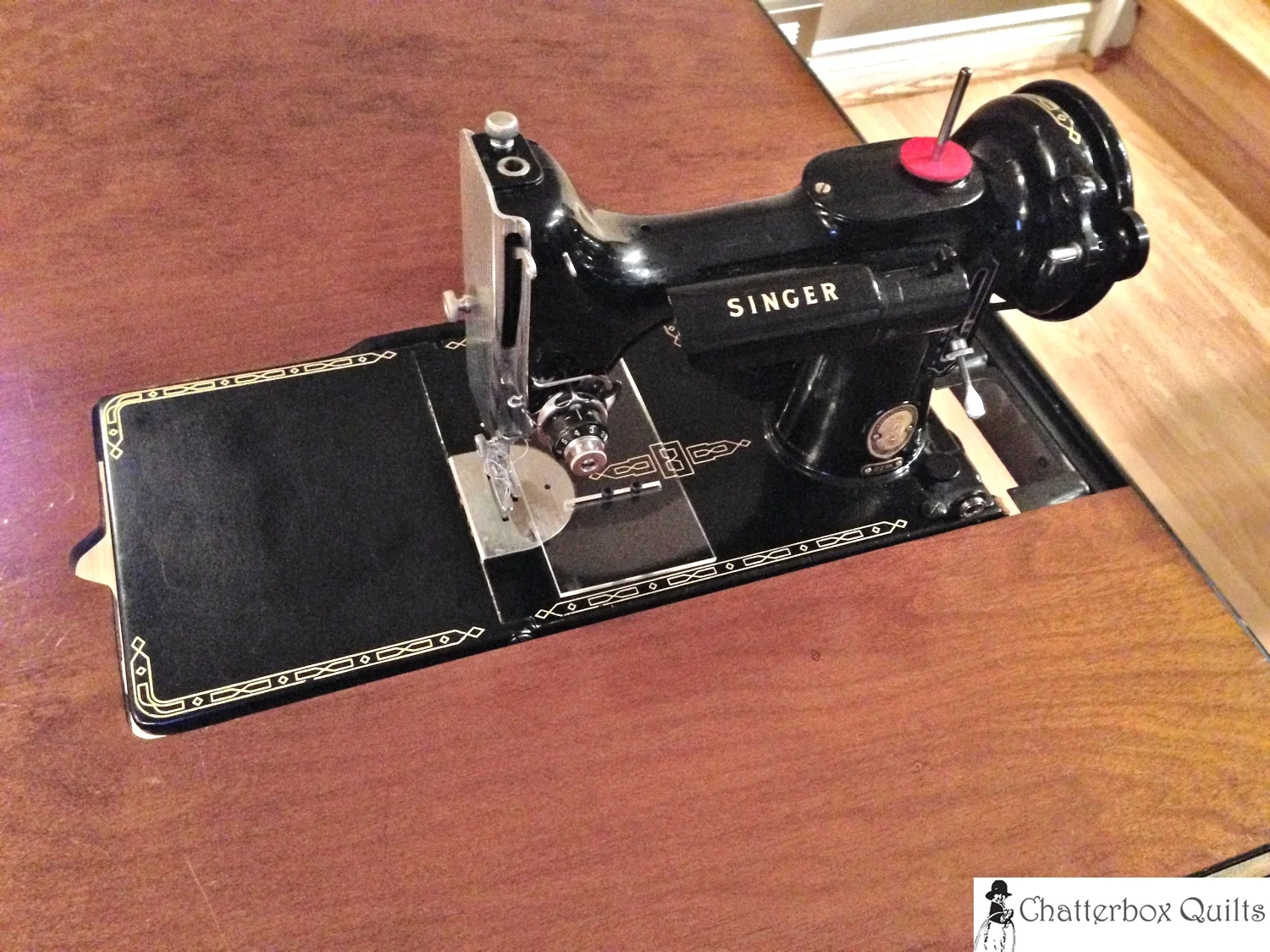
You may see this type of table at garage sales and it looks like a regular card table, but there is a slight difference: there's a cut-out in the top of it.
I'd like to show you one of my recent acquisitions. No, I haven't taken up card playing - I lose too often against my son - but this is actually an accessory for one of my vintage Singer sewing machines.
You may see this type of table at garage sales and it looks like a regular card table, but there is a slight difference: there's a cut-out in the top of it.

Do you know what it's for? If you don't, watch the video below to find out.
I think this would be the perfect table to use with my Singer Featherweight 221 to do some outdoor sewing this summer. I just need to sand down the edge and refinish it with some black paint - sounds like another summer project.


If you're wondering about the acrylic piece screwed into the Featherweight bed, it's Nova Montgomery's Sew Straight guide. It's perfect to use as a fabric guide and can be easily adjusted for various seam widths. The best part is that it doesn't scratch the machine bed and I like that! Order one from Nova and tell her Kim sent you.
If you are thinking of buying a vintage sewing machine you may be interested in my eBooks for buyers (click here). If you are thinking of selling your machine you may be interested in my How To Sell a Vintage Sewing Machine eBook.


Welcome! I’m Kim Jamieson-Hirst of Chatterbox Quilts, a YouTube creator and host of The Quilter’s Way. I believe that quilting is more than just a 1/4” seam and that practice makes improvement and you are improving every day!
Contact me at kjh@chatterboxquilts.com.





Want to improve your quilting and have fun doing it? Join The Quilter's Way, a private online membership site that creates successful quilters.

Check out my favourite books and tools.
As an Amazon Associate I earn from qualifying purchases from links that you may find on the Chatterbox Quilts’ website.