
CHATTERBOX QUILTS’ BLOG
Helping Quilters Learn and Improve
How to Assess a Vintage Sewing Machine
One of the most important things I learned from my early experiences was that you need to be able to assess a machine knowledgeably when considering a purchase to ensure that you pay a fair price for it. The best deals are when someone is selling a machine privately and you usually do not have a lot of time to look the machine over. You really need to know about the model you are considering and ensure all the important parts are functional, and, if they aren’t, that you will be able to fix them. You don’t want to miss out on a good deal, but you also want to ensure that you are getting a functional machine.
I have LOTS of vintage SINGER® sewing machines. I guess you could say that I’m obsessed with them! My husband thinks I have enough of them – yeah, that’s like saying you can ever have enough chocolate! Hah! There is always another elusive machine – a turquoise (white) SINGER® 221 Featherweight, for sure – that is somewhere out there just waiting for me to find it and bring it home. If you are a fan of vintage sewing machines you know what I mean when I talk about my collection, and I’ll bet you have more than one vintage sewing machine too.
I wasn’t always a vintage sewing machine collector/addict. There was a time when I wouldn’t have taken a second glance at a SINGER® 66 Red Eye machine. Yes, it’s true: I didn’t notice them at all, but one day that all changed. One of my quilting guild members brought a SINGER® 221 Featherweight to a week-end retreat and I had to see what this little machine was all about. It piqued my curiosity and I started to look into vintage sewing machines, SINGER® models in particular (loved those shiny black beauties with the fancy gold decals). One machine caught my eye… and the rest is history!
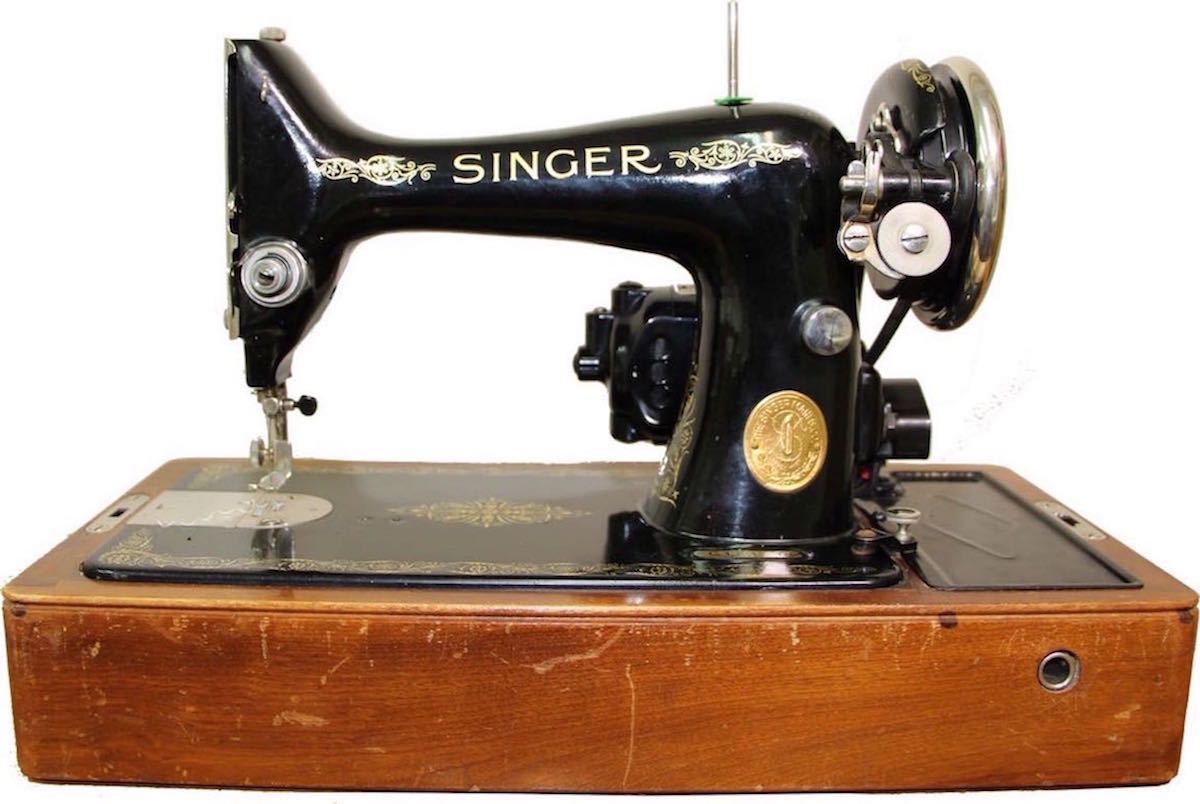
The first machine I purchased was a SINGER® 99K. The machine had been in storage for a while, but the paint and decals were in beautiful shape, as was the cabinet. I tested it out to be sure that it would actually stitch and, after a bit of negotiation, I ended up with in the back of my van heading home. I wasn’t very knowledgeable about these machines at the time or I would’ve noticed the crumbling and bare wiring on it. If I knew then what I know now, I would never have plugged this machine in. I was just lucky that I didn’t get a nasty shock from my first machine! That might’ve been the end of my vintage sewing machine adventure!

SINGER® 99K wiring when I bought it
The poor condition of the wiring could have been a real problem. The wiring had deteriorated so badly that it was crumbling in my hands so I had to do something if I was ever going to be able to use the machine. I considered taking it to a sewing machine repairman but their assessment fee of $100 with the possibility of a much higher cost to actually fix it didn’t impress me. My only alternative was, of course, to try to fix it myself. The machine was in great shape as was the cabinet, but if I didn’t learn how to re-wire it, it would become a nice door stop.
While I was investigating what to do with my newly acquired 99K, an opportunity to purchase another machine, a SINGER® Featherweight, presented itself. This time however, I had a bit more knowledge than I had had with my SINGER® 99K purchase. In researching a solution to my wiring problem with my SINGER® 99K, I had acquired considerable knowledge about different SINGER® models, particularly the SINGER® Featherweights. Who says going down internet rabbit holes isn’t helpful?!
When I contacted the seller, I found out that they wanted $350 for the machine which seemed really expensive considering I had paid $50 for my 99K. I knew that Featherweight models tended to be more expensive because they are so popular so I decided to take a look at it anyway. This is where my newly acquired knowledge really paid off. I had learned enough about Featherweights to know that this particular machine was in good shape and was fully functional. What was even better was that this particular model wasn’t a 221, but a 222K, the rarer Featherweight model. These models sell for much more than $350! I quickly closed the deal and took my new acquisition home. It was in such great shape that I didn’t even have to oil it. If I hadn’t taken the time to pour over vintage sewing machine websites, I wouldn’t have known how collectible and expensive this particular machine usually is and might’ve walked away from the deal.
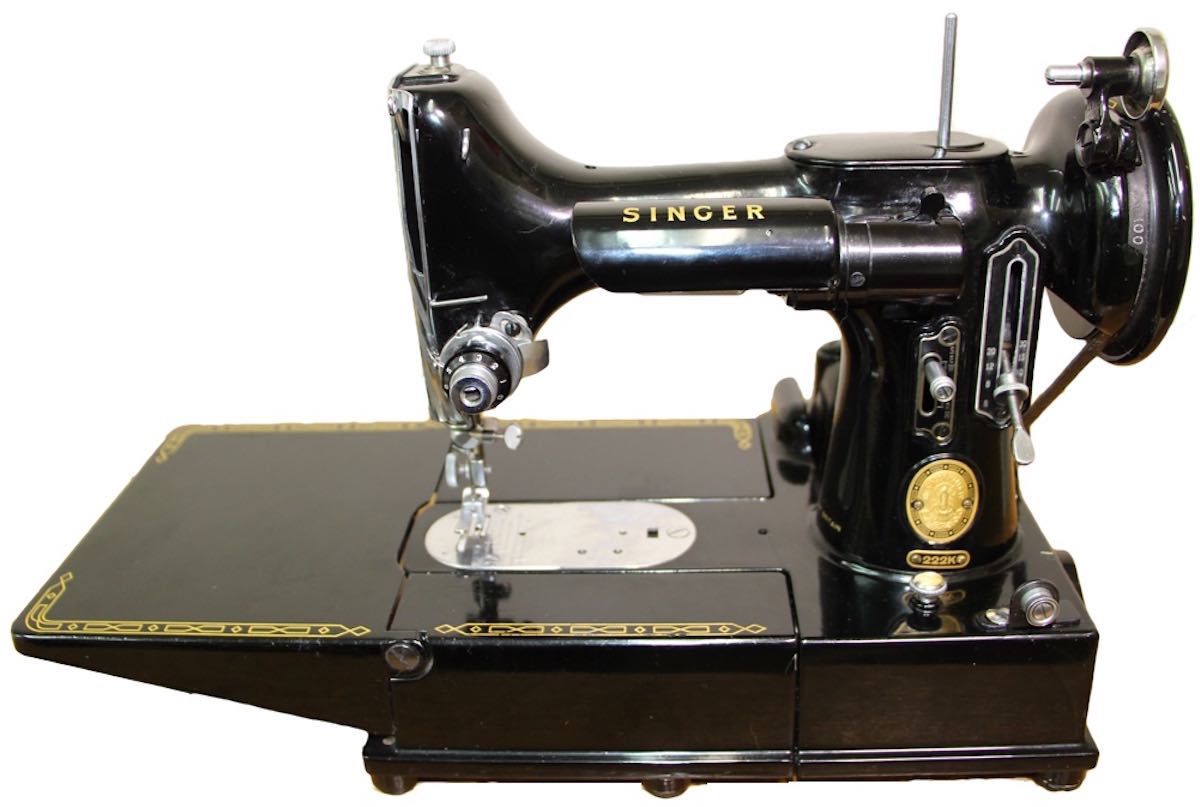
SINGER® 222K
This experience really illustrated how valuable it is to be prepared so that you can grab an opportunity when it presents itself. I have seen machines of this type for sale for over $1000, although I have a feeling that a price that high is the seller’s “wishful thinking”. I knew “just enough” to be confident in making this purchase ($350 is a lot of money) and got a machine of great value.
After these first two “quick purchases” I got “the bug” and started actively looking for vintage sewing machines to add to my collection. I knew that I had to learn a lot more about acquiring and repairing these machines before I considered purchasing any more. I started looking for information but there was no “one place” I could go for that information. It was very frustrating because many of the more comprehensive sites were targeted at serious collectors and were not suited for someone like me who just wanted to restore the machine to working condition. I did not have any intention of stripping and repainting the machine or reapplying the decals. I wanted machines that looked good but, more importantly, they had to stitch. I spent many hours scrolling through websites and writing down the information that I needed so I could have it for future reference.
One of the most important things I learned from my early experiences was that you need to be able to assess a machine knowledgeably when considering a purchase to ensure that you pay a fair price for it. The best deals are when someone is selling a machine privately and you usually do not have a lot of time to look the machine over. You really need to know about the model you are considering and ensure all the important parts are functional, and, if they aren’t, that you will be able to fix them. You don’t want to miss out on a good deal, but you also want to ensure that you are getting a functional machine.
Being able to get all the information you need to assess and restore a vintage sewing machine in one package would be the perfect solution. You won’t need to “learn-as-you-go” as I did, so you can be confident in your purchase even if you only ever buy one machine.
Over the years I’ve developed a checklist that I use to assess potential vintage sewing machine purchases. This has helped me to determine if I want to buy a particular machine and has saved me from buying one that would've required too much work to return it to a functional machine.
Watch the video below for more information on assessing a vintage sewing machine.
I would love to share this “hard-won” knowledge with you so that you can experience the joy of owning a vintage sewing machine without having to spend hours of time researching. I have put together some valuable FREE content that can get you started on thinking about purchasing a vintage sewing machine.
I’ve created a FREE printable download, Vintage Sewing Machine Assessment Checklist, to share this valuable information with you. Be sure to download and print it out now so you’ll have it available to take with you when you are evaluating a vintage sewing machine.
You always have to do your research to determine what the average price for a certain machine model is in your area, but with the Vintage Sewing Machine Assessment Checklist, you’ll have a methodical approach with a list of items that you should be looking at when evaluating a vintage sewing machine for purchase.
If you are thinking of buying a vintage sewing machine you may be interested in my eBooks for buyers (click here). If you are thinking of selling your machine you may be interested in my How To Sell a Vintage Sewing Machine eBook.
Please share this information with your friends by clicking on the "Share" icon below.
Download your FREE Vintage Sewing Machine Assessment Checklist now so you'll be ready to evaluate your first, or next, vintage sewing machine.
I hope you find this the Vintage Sewing Machine Assessment Checklist helpful and look forward to hearing about your latest – and next – vintage sewing machine purchase.
Creatively,

The Most Important Vintage Sewing Machine Attachment
The owner's manual is a critical source of information about how to use, maintain and even repair your sewing machine. You’ll need the manual to learn how to thread the machine, wind the bobbin and use the machine properly. The manual explains what would’ve originally been included in the machine purchase. It details the attachments that would’ve been sold with the machine.
One of the most important “attachments” that comes with your SINGER® vintage sewing machine is the owner’s manual. Not what you thought I was going to say, was it?!
The owner's manual is a critical source of information about how to use, maintain and even repair your sewing machine. You’ll need the manual to learn how to thread the machine, wind the bobbin and use the machine properly. The manual explains what would’ve originally been included in the machine purchase. It details the attachments that would’ve been sold with the machine.

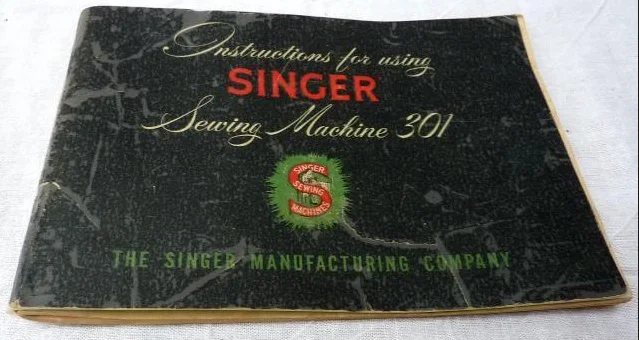
SINGER® 301 manual
Each SINGER® model is unique so it is important to have information about the specific model that you own. This information is in the owner’s manual. The good news is that you will often find that many vintage sewing machines are sold with the original manual. If the machine you purchased does not include a manual, there is still hope. You can usually download the machine’s manual free from various websites. All you need to locate the correct machine manual is your machine’s model.
I’ve created a FREE What to do if You are Missing a Manual guide that includes websites where you might be able to download a manual for your vintage SINGER® sewing machine. Enter your information below to receive it and be sure to print it out so you’ll have it for future reference.
You’ll also see some websites online that will sell you a download of a vintage sewing machine manual. You don’t have to spend a cent to get your vintage sewing machine’s manual: there are many websites that offer them for free.
If you don't have a manual for your vintage sewing machine, I hope you'll be able to find one at the suggested websites in the FREE printable What to do if You are Missing a Manual download. It's your most important attachment :)
If you are thinking of buying a vintage sewing machine you may be interested in my eBooks for buyers (click here). If you are thinking of selling your machine you may be interested in my How To Sell a Vintage Sewing Machine eBook.
Feel free to share this blog post with your friends by clicking on the "Share" icon below.
Creatively,

P.S. Join me in the private Chatterbox Quilts Facebook group for quilting and vintage sewing machine information. I love to share and learn from the group members so be sure to join me there.

How to Thread a Singer 201 Sewing Machine
One of the members of my Chatterbox Quilts Facebook group needed some help in threading her Singer 201 sewing machine, so I created a short video on how to do this.
Do you have more than one sewing machine? I don't know anyone who doesn't :) Do you have problems remembering how to thread a specific machine or which way the bobbin case is inserted?
You're not alone.
One of the members of my Chatterbox Quilts Facebook group needed some help in threading her Singer 201 sewing machine, so I created a short video on how to do this.
Click on the image below to watch the video.
Is there information that you need help in remembering when you are working with one of your sewing machines? Leave me a comment below as to what you struggle with the most with your sewing machine function.
If you are thinking of buying a vintage sewing machine you may be interested in my eBooks for buyers (click here). If you are thinking of selling your machine you may be interested in my How To Sell a Vintage Sewing Machine eBook.
Creatively,

P.S. Join my private Chatterbox Quilts Facebook group for quilting and vintage sewing machine discussions. I'd love to chat with you there :)
P.P.S. Did you see my blogpost about creating your own Multi-Purpose Quilt Spray with simple household ingredients? Get the FREE recipe and information download. You'll be amazed at what you can do with this spray.

EBay Is Not The Place To Buy A Vintage Sewing Machine
If you are looking for a really great deal and you are comfortable in your ability to assess a vintage sewing machine, then I recommend that you buy local. Yes, you can buy a vintage sewing machine from eBay, but sewing machines are heavy so even if you find a good deal online you are going to have to pay some hefty shipping charges to get it to your house. You have a better chance of getting a good deal on a vintage sewing machine if you find one locally that is underpriced due to its condition. Vintage sewing machines that needs some tender loving care are your best bet.
If you are looking for a really great deal and you are comfortable in your ability to assess a vintage sewing machine, then I recommend that you buy local. Yes, you can buy a vintage sewing machine from eBay, but sewing machines are heavy so even if you find a good deal online you are going to have to pay some hefty shipping charges to get it to your house. You have a better chance of getting a good deal on a vintage sewing machine if you find one locally that is underpriced due to its condition. Vintage sewing machines that needs some tender loving care are your best bet.
Machines sold on online sales sites such as EBay or specialty stores tend to be more expensive, especially when you factor in the cost of shipping. In the case of EBay, you are competing against other people who also want this machine and this can drive the price higher than what the vintage sewing machine may actually be worth. Vintage sewing machines on EBay may have been refurbished, so the price will be higher. You have to scrutinize the photos and take the seller on faith when they describe the condition of the machine. If you want a machine in really good shape that doesn’t need repair, it may be worth purchasing it this way – but only from a seller that you can trust and one who knows how to ship a vintage sewing machine so it arrives in one, and not several, pieces.

SINGER® 222 ad on eBay.ca
Estate sales are another venue where I have had success buying a vintage sewing machine. In my area I receive emails about estate sales that have information and photographs of everything that is available. I can see the machine online first, but then I have to go to the estate sale to inspect it. You can sometimes find a good deal at these sales, but be aware that you will have to arrive early and line up to have any chance of getting the vintage sewing machine in which you are interested. They say "the early bird gets the worm" and if you are wanting a vintage sewing machine that is being sold at an estate sale, “the early buyer gets the machine”.

SINGER® 301 that I bought at an estate sale
If you have the patience and don’t mind spending time browsing, there are also opportunities to find good deals at local places such as Goodwill stores or a yard sale. You can get some really good deals in thrift shops such as Goodwill or the Salvation Army, however there is no guarantee that there will be any machines at all (never mind the one you are looking for) when you visit. The price of the vintage sewing machine varies with the experience and knowledge of the manager meaning that you can see a large range in prices. The good news is that new stock is always being added so you just have to keep checking back (and you might find some other deals as well!).
The likelihood of finding a vintage sewing machine at a yard sale depends on where you live. In some locations there is a chance you may find a used machine, however in other places, such as where I live, it would be very rare for someone to sell a vintage sewing machine at a yard sale. People in my area seem to sell their vintage sewing machines mostly through online classified ads. The big problem with looking for a vintage sewing machine at a yard sale is that you might spend a lot of time going from sale to sale before you find the machine you are looking for – if you find any vintage sewing machines at all.

Vintage Sewing Machine ad on Kijiji.ca
My favourite method for shopping for a vintage sewing machine is online. Vintage sewing machines sold on classified ad sites such as Craigslist or Kijiji are usually less expensive – often because they are in need of a little, or a lot of, TLC. I like the convenience of shopping without having to drive all over just to look at the machine. There is usually enough information in the ad to allow me to do research to determine if this is a model that I might consider buying. I can often contact the seller if I require more information or additional photographs to decide if it is worth the trip to look at the actual machine or to purchase it online. This method allows me to actually look at the machine before I pay for it. Unfortunately, since you have to visit the owner, this method may limit the location from which you can purchase the machine. I have been known to travel for four hours to look at a machine that I found online (much to the dismay of my husband).
I have created a FREE printable download, Find Your Vintage Sewing Machine Online, that lists websites to search when you are looking for a vintage sewing machine. Be sure to print it out right away so you’ll have it available when you want to start your search for a vintage sewing machine.
If you are thinking of buying a vintage sewing machine you may be interested in my eBooks for buyers (click here). If you are thinking of selling your machine you may be interested in my How To Sell a Vintage Sewing Machine eBook.
Share this blog post with your friends by clicking on the "Share" icon below.
Good luck and good hunting!
Creatively,

P.S. Join the private Chatterbox Quilts Facebook group for discussions on quilting and vintage sewing machine. I love to help you with your quilting questions, so be sure to join me there.

Do Your Research and Save Money on Your Vintage Sewing Machine
I’ve compiled all my favourite websites into a FREE printable download, Vintage Sewing Machine Websites, that I find useful for this purpose. Print it out right away so you’ll have it handy when you need to refer to it.
I purchase most of my vintage sewing machines from online classified ads so I have the luxury of getting the information electronically. I can usually locate a manual for that model online which I use to learn more about the machine. I can then determine if I'm interested in that particular machine or not. If I can’t find information about a particular vintage sewing machine model, I don’t bother to go see it. I won't know enough about the features of the machine or how it works to decide if I'd like to buy it, let alone if the price is reasonable. I prefer to be an informed purchaser.
If you don’t have the opportunity to first learn the model of the machine to do your research, it becomes a bit trickier. For example, if you find a vintage sewing machine at a yard sale, you are going to have to decide on whether to buy the machine without knowing everything about it. You could, of course, go home, do your research, and make a trip back once you have that information. You may find that someone else has purchased the machine by that time.

Do you know what model this is?
When I see a sewing machine for sale, the first thing I do is try to find out what model it is so I know what to expect when I see the machine in real life. If I am shopping online this usually means looking at the pictures to try to see the model number or the serial number. If the photos aren’t very clear, I will ask the seller if he/she can post more photos and specify the areas of the machine that I want to see.
All SINGER® sewing machines have a SINGER® badge on the front of the machine. Additionally, some models have “SINGER® Sewing Machine Company” or similar company information across the top of the machine. These badges can indicate if the model was a special edition, which may make it even more valuable.

Badge on SINGER® 221K sewing machine
All SINGER® sewing machines were issued with a serial number, which can be found in various places on the machine. Some are stamped on the front of the machine near the bottom, some are underneath the machine bed. They are all long numbers and typically, for the years I'm looking at, start with one or two letters. If you can see the serial number, you can use it to identify the machine model by looking up the number on the SINGER® Sewing Company web page.

SINGER® 128 Serial Number
I’ve compiled all my favourite websites into a FREE printable download, Vintage Sewing Machine Websites, that I find useful for this purpose. Print it out right away so you’ll have it handy when you need to refer to it.
Once you determine what model the vintage sewing machine is, you can research that model to ensure it meets your requirements (e.g. reverse, zigzag stitch), what attachments should come with it, etc. before you go to see it. You can quickly decide if it is worth your time to go to see this machine. I have some favourite websites that provide lots of information about various models. Some, such as www.SINGER® 301.com, focus specifically on a particular model and are a wealth of information. I also like to check to see if there are reviews of the specific model that I am interested in so I can get a feel for what actual owners think of the machine. As with any reviews, I take these with a grain of salt, unless I find that everyone has problems with the machine – then I may have to rethink my interest in that particular model!
Download the FREE Vintage Sewing Machine Websites printable that you can use when you are doing your research. Be sure to print it out and keep it near your computer so that you can be ready the next time you go vintage sewing machine hunting.
If you are thinking of buying a vintage sewing machine you may be interested in my eBooks for buyers (click here). If you are thinking of selling your machine you may be interested in my How To Sell a Vintage Sewing Machine eBook.
Please share this information with your like-minded friends by clicking on the "Share" icon below.
Creatively,

P.S. Join the private Chatterbox Quilts Facebook group for quilting and vintage sewing machine information. If you have any quilting friends who'd like to join, we'd love to have them join too.

Welcome! I’m Kim Jamieson-Hirst of Chatterbox Quilts, a YouTube creator and host of The Quilter’s Way. I believe that quilting is more than just a 1/4” seam and that practice makes improvement and you are improving every day!
Contact me at kjh@chatterboxquilts.com.





Want to improve your quilting and have fun doing it? Join The Quilter's Way, a private online membership site that creates successful quilters.

Check out my favourite books and tools.
As an Amazon Associate I earn from qualifying purchases from links that you may find on the Chatterbox Quilts’ website.