
CHATTERBOX QUILTS’ BLOG
Helping Quilters Learn and Improve
Every Quilter Needs to Know How to Free Motion Quilt
You really, really need to know how to free motion quilt. Free motion quilting is the most creative and satisfying part of the quilting process. You’re missing out on this part of your project if you don’t know how to free motion quilt.
I don’t want to put pressure on you but you really, really need to know how to free motion quilt. Some quilters go through their whole quilting life without learning free motion quilting and they are missing out on a huge part of the quilting journey. I believe that using free motion quilting in your projects can be the most creative and satisfying part of the quilting process. Along with choosing the fabrics, quilting your projects is one of the two ways that you can really put your personal stamp on the quilt. It’s a shame that some quilters miss what can be the most creative aspect of the project, even more impactful than choosing your fabric.
Money
Let’s start with the most straight forward reason to learn how to free motion quilt – money! I don’t think that saving money should be the only reason for doing your own quilting on a project but it certainly is a tangible benefit that you will get for every project you quilt yourself. The cost of getting someone else to quilt your project can run from $100 to hundreds of dollars depending on the type of quilting that is being done. Now, I am not saying that you shouldn’t send out a project to someone else for quilting. Some of my best quilting friends are long-armers and they can do an amazing job for you. If you have an extra special project that warrants custom quilting and you are not confident you can do it justice, then it is definitely a good idea to get a “professional” to do the quilting. The results from a professional longarm quilter will be worth the extra expense. Most projects don’t need a professional’s touch so if you are able to quilt your own projects, you’ll be able to save money on every quilt that you do yourself. Depending on the number of projects you complete, this can mean hundreds or thousands of dollars in savings in a year.

In addition to the explicit cost-savings of doing your own quilting, the cost of quilting can show up in the number of UFO’s that are in your studio. A significant number of UFO’s (or WIP’s as I prefer to call them) will be stopped at the stage where the top is finished but there has been no progress in the quilting. This is often because the quilter doesn’t know how they should quilt that particular project. They are unwilling to try free motion quilting themselves but are also unwilling to have someone else quilt it. The inability to finish a project is a huge waste of effort and money. In addition to the cost of the fabric, thread and time that have gone into that quilt, it’s tragic to put your creative efforts into a project only to leave it in an unfinished state.
Finally, the cost of having someone else quilt your projects will impact the decisions you make in very subtle ways. If you don’t want to pay someone else to quilt your projects, you may be unconsciously choosing methods for quilting your projects that you are capable of doing (e.g. stitch in the ditch only). You may even be choosing projects to make that don’t need free motion quilting just to avoid the whole issue. Just imagine what you could do if you knew how to free motion quilt yourself.
Control
Not knowing how to free motion quilt means that you are abdicating control over a key part of the quilting process. You will either be sending your quilt to someone else to quilt or you will be making design choices that limit your choices when it comes time to quilt your project. As a creative person you may feel really uncomfortable giving up control of something in which you have invested so much of yourself. By learning how to free motion quilt you will be able to take back control of your projects.
Once you become comfortable with free motion quilting technique, you can complete your project from start to finish the way you want. Quilting just becomes part of the process of making a project and can be adapted to ensure the project turns out the way you envisaged it. You will be able to control the design decisions and the timing decisions for the project rather than be dependent on the decisions or availability of a third person. If you do the free motion quilting, you can complete your project how you want and when you want. Even better, you’ll be able to say that you did it all yourself.
In the situation where you want to send out your project for quilting, your knowledge of free motion quilting will really help you communicate your expectations to the person who is going to quilt it. It can be difficult to communicate how you would like the final product to look if you have never done any free motion quilting. Your experience with free motion quilting will help you discuss options with the professional quilter so you’ll both be happy with the end result. It’s always good to have some knowledge about the service for which you’re hiring someone to avoid miscommunication and disappointment.

Creativity
Enhancing your ability to express your creativity is what I think is the greatest benefit of knowing how to free motion quilt. Being able to complete the whole process when making a project allows you to free up your mind and bring your creativity to bear on the whole project. You will be able to make creative decisions that coordinate all parts of your project from the original design choice, through fabric choices, quilting and finishing. Having control of all aspects of the creative process allows you put your personal stamp on every one of your projects. Not only do you get to make the initial design choices but you can adapt as your project progresses. If your original thoughts about quilting motifs don’t seem to be working out, you can make adjustments to adapt the quilting to your new perspective. The ability to adapt as you move through your project allows you to problem solve and also opens up opportunities to make creative decisions as inspiration strikes you. The ability to influence all parts of your project construction will make the creation of your quilt an integrated, organic design process rather than a set of rigid tasks.

Awesome Blossom pattern from Chatterbox Quilts
As you become more confident in your free motion quilting, you may find that the quilting part of making a project becomes the dominant part of the creative process and the signature feature of some projects. Adding more complex quilting to areas of your quilt will allow you to express your creativity in ways that are not possible if you just do simple quilting. The ultimate example of this is a whole cloth quilt where you start with a “blank page” and use the quilting to make the design. The freedom of not being constrained by a “pattern” or fabric choices can be daunting at first but can also result in some of your most creative work.

Finally, as you become more comfortable with free motion quilting, you may find that your desire for creativity leads you to experiment with projects that are on a whole different level. There are an infinite number of ways to combine different quilting such as free motion quilting and ruler work with nontraditional materials such as cork or leather in ways that result in an amazing project. The free form nature of free motion quilting allows it to be adapted to many applications rather than just keeping your quilt sandwich together. Once you get started you won’t want to stop.

“Just Do It”
There are many reasons that quilters should know how to free motion quilt but I think that having creative control of your whole project is the most important one. Once you learn how to free motion quilt, you will revel in the creative freedom that you have when quilting even the simplest quilt. Sure, you’ll save money if you quilt your own project but I think that the ability to put your own personal stamp on a project is priceless. So what are you waiting for? It’s past time for you to begin improving your free motion quilting skills.
Download the free Get Out of the Ditch! guide to learn how to start free motion quilting by clicking here.
Now that you know the reasons you need to learn free motion quilting, check out my course “First Steps Into Free Motion Quilting” by clicking here.
If you already know how to free motion quilt then you may be interested in “3 Ways to Improve Your Free Motion Quilting” by clicking here.
Kim
Creatively,

P.S. Do you strive to improve your quilting skills? Do you want to have fun doing it? Do you want to meet other quilters in a supportive, safe environment? If you answered “yes” to these questions, you need to join The Quilter’s Way. The Quilter’s Way is the only quilting membership site that includes both training and an active, supportive online community. Don’t wait another day! Join now.
Tips for Holding Virtual Guild Meetings
We’ve been using ZOOM in The Quilter’s Way for over a year now to allow our members (who live in many different countries) to interact with each other virtually. Recently, we held our first virtual quilt retreat, Energize!, to great success. Participating in a virtual meeting is not quite the same as attending one in-person but it sure is a lot more convenient (i.e. no travel and no “forgotten” items). It can allow for some extra creativity such as sharing video courses or photos as part of your meeting. It’s also very easy to host guest speakers from different locations – and it’s a lot cheaper too!
A number of guilds, including the local one that I belong to, are adapting to social distancing by holding virtual meetings. This is a great way to interact with your other guild members at a time when it’s difficult, if not impossible, to be in the same place together. It does take a little getting used to get comfortable using this type of technology, but it isn’t hard and it’s the perfect way to connect with your quilting friends.
If you are considering holding a virtual meeting in your guild, I have a few tips to help the meeting go smoothly:
Assign someone to “run” the meeting and manage the technology and member interaction to ensure everyone gets to participate. It is difficult to be “leading” the guild meeting and managing the members and technology at the same time.
Have someone available to help members who may be struggling with technology.
Decide if the interaction with members is going to be via the chat feature (where people can type in their comments) or video/audio. Video is more interactive but requires a more structured approach to the meeting to ensure everyone gets a “turn” and that only one person talks at a time.
Provide a fun activity (even just a chat) at the start of the meeting to keep members entertained while people are joining the meeting. It can sometimes take a minute or two for everyone to be admitted to the meeting.
Encourage members to have good lighting especially if they want to show off their quilts.
If you are having a guest speak at your guild, work with them ahead of time to make sure that any tech issues are resolved and that they have the right amount of control of their portion of the meeting. Supporting them with member interaction or chat responses helps them focus on their presentation and makes the experience better for everyone.
I am currently booking for virtual presentations or workshops. If you are planning your guild program, I offer the following presentations:
Conquer Your Fear of Free Motion Quilting
Setting up Your Studio Space
How to “Wrangle Your Scraps”
You can go to the Chatterbox Quilts website here to get more information or you can email me at kjh@chatterboxquilts.com if you are interested in hiring me for a guild presentation or workshop. I’d love to speak to your guild or quilt group.
Take Care,
Kim
Creatively,

How to Sell A Vintage Sewing Machine Successfully
Most people who are looking to buy a vintage sewing machine are doing it out of the love of these unique and attractive machines. Do a little homework, apply some elbow grease, and display your machine effectively and you will sell your machine for the best price.
Most people that are selling a vintage sewing machine will sell for a price that is too low because they don’t know much about their machine. It is worth getting to know your machine a little bit so that you can make it as attractive as possible to prospective customers.
Assessing your vintage sewing machine will not only help you determine the price that you can sell it for but will also provide information about whether the effort to sell will be worth it. You don’t want to spend lot of time and money preparing a machine for sale if the likely selling price is very low.
The amount of money you can sell your machine will be dependent on the demand for the specific model of your machine. Getting the best price for your specific vintage sewing machine is dependent on three main factors:
Inherent Value
Understanding the inherent value of your machine is necessary for setting a selling price but it is also important for determining how much effort you want to put into selling the machine. Singer made many models over the decades and each has its own value to prospective customers. Determining the value of your machine will require that you know its model, that you assess its condition and determine if it still works properly.
Attractiveness
Although purchasers are interested in machines that work, many people purchase vintage sewing machines for their appearance. Making sure that your machine looks as attractive as possible and operates smoothly is extremely important if you wish to get the best price. Most purchasers will be “turned off” by pictures of dirty or neglected machines because it suggests that the previous owners have not taken care of them.
Selling
The actual sale of a vintage sewing machine can be simple, painless process if you have prepared properly. Your success will be determined by how you set your price, how and where you list the machine, and how prepared you are once a prospective customer visits to see the machine. The selling process does not have to be a lot of work, a few simple actions will pay big dividends when the sale actually takes place.
Most people who are looking to buy a vintage sewing machine are doing it out of the love of these unique and attractive machines. They will want the machine to work because part of the attraction is being able to use the machine to create quilts or garments, however they could get the same functions from a modern used machine. It is the look and style of the vintage sewing machine that is what attracts the buyer so, as the seller, it is important that you respect that love and present your machine in the best possible way. Do a little homework, apply some elbow grease, and display your machine effectively and you will sell your machine for the best price.
If you would like to learn more about how to sell your vintage sewing machine you may be interested in my eBook “How to Sell A Singer Vintage Sewing Machine – A 3 Step Process for Successful Selling”. In this eBook I provide a simple 3 step process to help you sell your vintage sewing machine. The process contains details on how to set the appropriate price, how to make your machine as attractive as possible and what actions to take to ensure that your selling efforts are successful. Click here if you would like more information on my eBook.
Creatively,

Tips for Solving Bobbin Thread Issues
When having issues like this, it's best to start from scratch and use a new bobbin and a new needle. Unthread your machine, clean out the bobbin area, insert a new needle, wind up a new bobbin, and then rethread your machine and see how it goes.
In a recent TQW Live, one of the members was having problems with her bobbin thread when making the strip pieced blocks for the Diamond Bright project. The blocks for the project are made using a paper (or fabric) foundation and she wasn't getting great bobbin stitches. There are a few reasons for this:
1. You could be using the wrong bobbin or not have it wound evenly. Check to ensure that you're using the proper bobbin for your brand of sewing machine. In this case, she is using a Janome machine, so Janome bobbins are the best to use.
2. Your bobbin tension might need adjusting. If you have the ability to adjust the tension in your bobbin case, this is something you should do first before addressing the top tension. If you don't know how to adjust your bobbin tension, check out this video from Handi Quilter (while she is working with a longarm machine, the same information applies when talking about how to check the bobbin tension).
3. Your bobbin area might need cleaning. Follow the instructions in your manual and clean out the entire area, checking to ensure that there aren't any little bits of thread or lint caught in this area. If appropriate, oil that area as well.
3. You might be using the wrong size needle. Make sure you're using the right size needle for the thread you are using. Most needle manufacturers have charts to show you what size needle works best with what weight of thread.
4. You might need to rethread your sewing machine. Check your manual to ensure you are threading the machine correctly. With the model that is being used in this case, she needs to lock out the machine first before threading it. Not locking out when threading it can cause issues.
5. You might need to change to a different bobbin. While it can be hard to see with the naked eye, the bobbin you are using, while appropriate for your brand of sewing machine, might be damaged. Try winding a completely new bobbin and see if this helps.
6. You might need to adjust your top tension. If your bobbin tension is set properly and you are still having problems with the bobbin thread, you may need to tighten or loosen the top tension. Try making gradual changes in the top tension and check your results.
When having issues like this, it's best to start from scratch and use a new bobbin and a new needle. Unthread your machine, clean out the bobbin area, insert a new needle, wind up a new bobbin, and then rethread your machine and see how it goes. Hopefully one or several of these suggestions will solve our problem.
Creatively,
P.S. Do you strive to improve your quilting skills? Do you want to have fun doing it? Do you want to meet other quilters in a supportive, safe environment? If you answered “yes” to these questions, you need to join The Quilter’s Way. The Quilter’s Way is the only quilting membership site that includes both training and an active, supportive online community. It’s not your grandmother’s quilting circle! Don’t wait another day! Join now.
P.S. I am an Amazon affiliate and, if you purchase items by clicking through the links in this post, I will receive a small amount of commission. This doesn’t cost you any more $$$, but helps me to continue creating free content for you. Thanks!
My Favourite Quilting Tools 2020
I know you have them: those tried and true tools that you use all the time in your studio. They might not be fancy or expensive - the don’t have to be, they just have to work!

Martelli Palm Quilting Paddle Set
I have tools that I love to use in the Chatterbox Quilts’ studio and I recently shared them with my YouTube audience. If you’re wondering what I like to use and can recommend will work well for you, check out my video below. #affiliatelink
For more information on all of these items, be sure to check in the Description below the video.
If you would like to see more of my favourite tools and books visit here.
Creatively,
P.S. Do you strive to improve your quilting skills? Do you want to have fun doing it? Do you want to meet other quilters in a supportive, safe environment? If you answered “yes” to these questions, you need to join The Quilter’s Way. The Quilter’s Way is the only quilting membership site that includes both training and an active, supportive online community. It’s not your grandmother’s quilting circle! Don’t wait another day! Join now.
P.S. I am an Amazon affiliate and, if you purchase items by clicking through the links in this post, I will receive a small amount of commission. This doesn’t cost you any more $$$, but helps me to continue creating free content for you. Thanks!
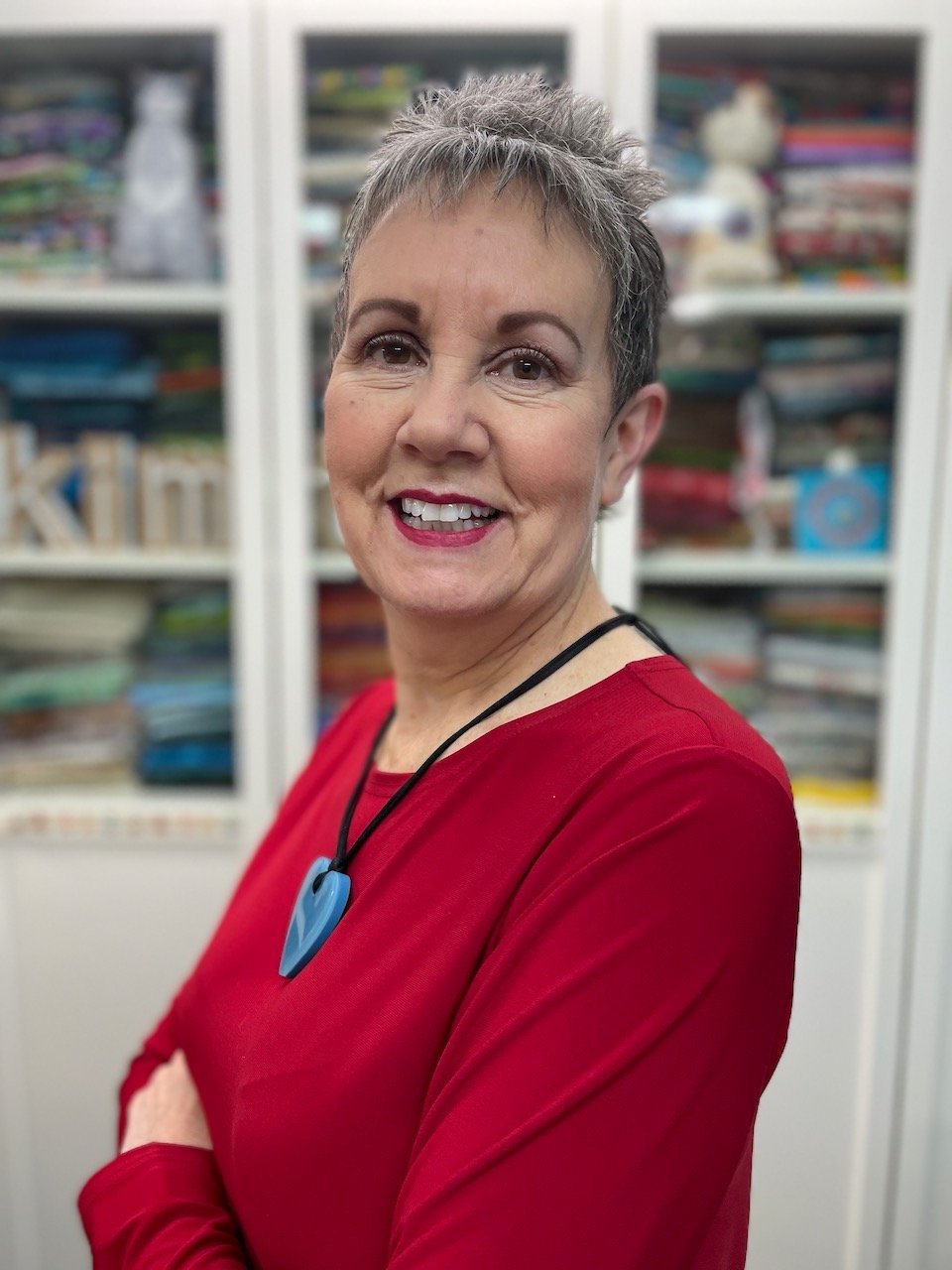
Welcome! I’m Kim Jamieson-Hirst of Chatterbox Quilts, a YouTube creator and host of The Quilter’s Way. I believe that quilting is more than just a 1/4” seam and that practice makes improvement and you are improving every day!
Contact me at kjh@chatterboxquilts.com.





Want to improve your quilting and have fun doing it? Join The Quilter's Way, a private online membership site that creates successful quilters.

Check out my favourite books and tools.
As an Amazon Associate I earn from qualifying purchases from links that you may find on the Chatterbox Quilts’ website.