
CHATTERBOX QUILTS’ BLOG
Helping Quilters Learn and Improve
How do you Stitch the Perfect 1/4" Seam?
All quilters know that achieving a “perfect” ¼” seam is the standard of excellence in quilting, but sometimes you might want to use a scant ¼”, especially when you have a multi-seamed project.
All quilters know that achieving a “perfect” ¼” seam is the standard of excellence in quilting, but sometimes you might want to use a scant ¼”, especially when you have a multi-seamed project.
Most quilting sewing machines have a ¼” foot – some machines, like the Janome MC9450 have several ¼” feet to suit the preference of every quilts.
Once you have your ¼” foot on your sewing machine, you need to test to see if your ¼” foot is truly allowing you to stitch a ¼” seam. It’s really easy to check this. You need to take 3 pieces of fabric 2½” wide and stitch them together with your ¼” foot. The centre piece should be 2” as ¼” of the fabric has been taken into the seam on both sides - ¼” + ¼” = ½”.
If the centre piece is larger than 2”, your seam allowance is too small/narrow and needs to larger.
If the centre piece of fabric is smaller than 2”, your seam allowance is too big/wide and needs to be narrower. In either case, you’ll need to make adjustments.
How do you do this?
If your sewing machine has the ability to move the needle position, this is what you will need to do in either of these situations. If your seam allowance is too narrow, you will need to move your needle position to the left – away from your fabric edge.
If your seam allowance is too wide, you will need to move your needle position to the right – closer to the fabric edge.
Well this is fine if you have a sewing machine that has a needle adjustment feature, but… how do you get a ¼” seam allowance if you don’t have a ¼” foot?
There are several methods:
1. Use your ruler to measure ¼” away from the needle and mark this with painter’s tape. Can then use purchased notions such as these purple strips – or make your own guides.
2. You can use Post-it notes or several pieces of masking tape or painter’s tape stacked up on one another and place these at the ¼” mark on the bed of your sewing machine.
3. You can also stack up several (many!) index cards, one on top of one another to use as a seam guide.
I’ve covered how to get an accurate ¼” seam on your sewing machine, but what if you want a scant ¼” seam and what is this anyway? A scant 1/4” seam is just a thread or two narrower than a ¼” seam. It can come in handy when you have several seams all coming together as the thread and fabric take up some of your seam allowance, so in this situation, a scant ¼” seam might be the right solution.
Click on the image below to learn more about stitching a ¼” or scant ¼” seam.
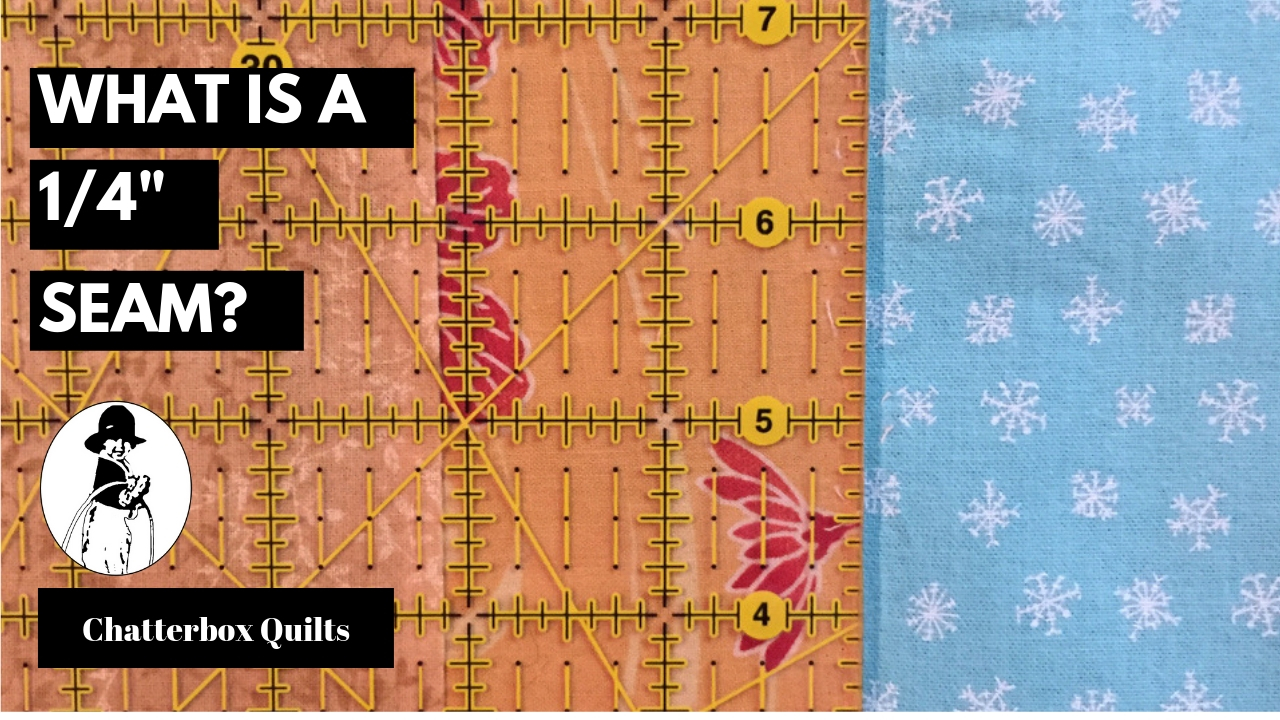
Whether you are using a true ¼” seam or a scant ¼” seam allowance, be sure to use this throughout the entire project so that all of your pieces will fit together the way they should.
How do you achieve the “perfect” ¼” seam on your sewing machine? Let us know in the Comments below.
Creatively,

P.S. Do you strive to improve your quilting skills? Do you want to have fun doing it? Do you want to meet other quilters in a supportive, safe environment? If you answered “yes” to these questions, you need to join The Quilter’s Way. The Quilter’s Way is the only quilting membership site that includes both training and an active, supportive online community. It’s not your grandmother’s quilting circle! Don’t wait another day! Join now.
P.P.S. Did you know that you can sign up to receive emails full of FREE quilting goodness? Click here to receive FREE content directly in your email inbox every few weeks from Chatterbox Quilts. I know you'll be glad you did!
P.S. I am an Amazon affiliate and, if you purchase items by clicking through the links in this post, I will receive a small amount of commission. This doesn’t cost you any more $$$, but helps me to continue creating free content for you. Thanks!

4 Tips on How to Quilt Your Quilt
The biggest problem I hear from quilters when it comes to the quilting part of their project is that they don’t know what motif to put on their quilt. They’re afraid that they’ll “ruin” their quilt, either through lack of skill or poor quilt motif choice. I’m not going to say that you can’t ruin a quilt through poor choices in these areas, but there are 4 considerations that I think will help you to avoid “ruining” your quilt.
The biggest problem I hear from quilters when it comes to the quilting part of their project is that they don’t know what motif to put on their quilt. They’re afraid that they’ll “ruin” their quilt, either through lack of skill or poor quilt motif choice. I’m not going to say that you can’t ruin a quilt through poor choices in these areas, but there are 4 considerations that I think will help you to avoid “ruining” your quilt. (And you can’t really ruin a quilt unless you tear it, stain it, burn it, etc. – everything else is just a learning opportunity).
This is what I like to consider before I choose a quilt motif for my quilt.
1. What is the purpose of the quilt?
This is the first thing I consider before quilting any of my projects.
Most quilts we make are ones that we want to be used. They may be baby quilts to be dragged around the house, a lap quilt to be snuggled under when reading, or a bed quilt to keep us warm at night. These types of quilts will be used and washed repeatedly – they’re what I call “utility” quilts. These types of quilts don’t merit custom quilting. A simple pantograph or all-over design will work perfectly well for the majority of these types of quilts. Pick a quilt motif that compliments the fabric or design of the quilt and get ‘er done.

Pattern is Chock a Block by Chatterbox Quilts
If the quilt top you have created is intricately pieced, it may merit custom quilting. If you would consider this an heirloom quilt to be viewed, but not used, custom or semi-custom quilting is the way to go. This might involve smaller, more complex quilting motifs or ruler quilting. You may want to use different quilt motifs in different parts of the quilt. This type of quilting takes more thought and will take longer to complete, but, if the quilt top merits it, this is the way to go.
Decide what type of quilting this particular quilt top needs and you are then ready to move onto the next consideration.
2. What is the focus of the quilt?
When I’m looking at a quilt top, I need to decide what will be the focus or star of it: will it be the piecing or appliqué or will it be the quilting itself?
For appliqué quilts, you definitely want to emphasize the appliqué itself. The quilting should enhance or accentuate the appliqué, not compete with it. In this case, the appliqué is the star, and the quilting is the supporting actor. Keeping your quilting motif simple will work on this type of quilt.

Pattern is from Community Quilt Along by Chatterbox Quilts & QuiltFusion
If, on the other hand, this is a pieced quilt with lots of negative space, for example, a modern quilt, the star will be the quilting. You’ll be able to do lots of custom or semi-custom quilting in the negative space on these types of quilt. The sky is the limit here, so have fun and combine multiple quilting motifs to show off your skill.
Which brings us to the next consideration.
3. What is your skill level?
I always say that it is better to do a simple design well than a complex design poorly. (I should have this tattooed on me!).
If you struggle to do feathers or don’t like how yours look, don’t do feathers on your quilts! If you are a master at stippling, use this on your quilts. Simple designs can look just as good as more complex ones if done well.

Don’t think you have to do a certain quilt motif because you see it on many quilts. If you can’t do it well (yet!), stick to the designs that you have mastered. There will be lots more quilt tops just waiting for those feathers when you have mastered them.
The next thing to consider is…
4. What is the style of the quilt?
Some quilt motifs are more appropriate on certain styles of quilts. I’m not saying that this is a rule (are there really rules in quilting?!), but it’s something to consider.
Is your quilt a traditional or modern quilt? You may want to use more traditional quilting motifs, such as feathers, crosshatching, etc. on a traditional quilt top.
If you have a more modern quilt, simple designs, such as geometric shapes, stippling, or wavy walking foot quilting, might be more appropriate.
All of these considerations are suggestions only as everyone has their own ideas as to what type of quilting they want to have on their own quilt tops, but they are a starting point to help you in making this decision.
In all cases, remember that if your quilt has busy fabrics, you won’t see the quilting well, so your beautiful custom quilting won’t be seen. If you choose to put this amount of effort into quilting a quilt with busy fabrics, don’t be disappointed when the quilting doesn’t show. The reverse is true: you will definitely see the quilting on solid fabrics, so go for that custom work.
In general, I like to use curved quilting motifs on quilt tops that have straight lines in them and straight line quilting motifs on quilt tops that have curved piecing in them. Use the opposite type of quilting motif to the quilt top to work harmoniously together.
For more information on choosing a quilt motif, click on the image below.
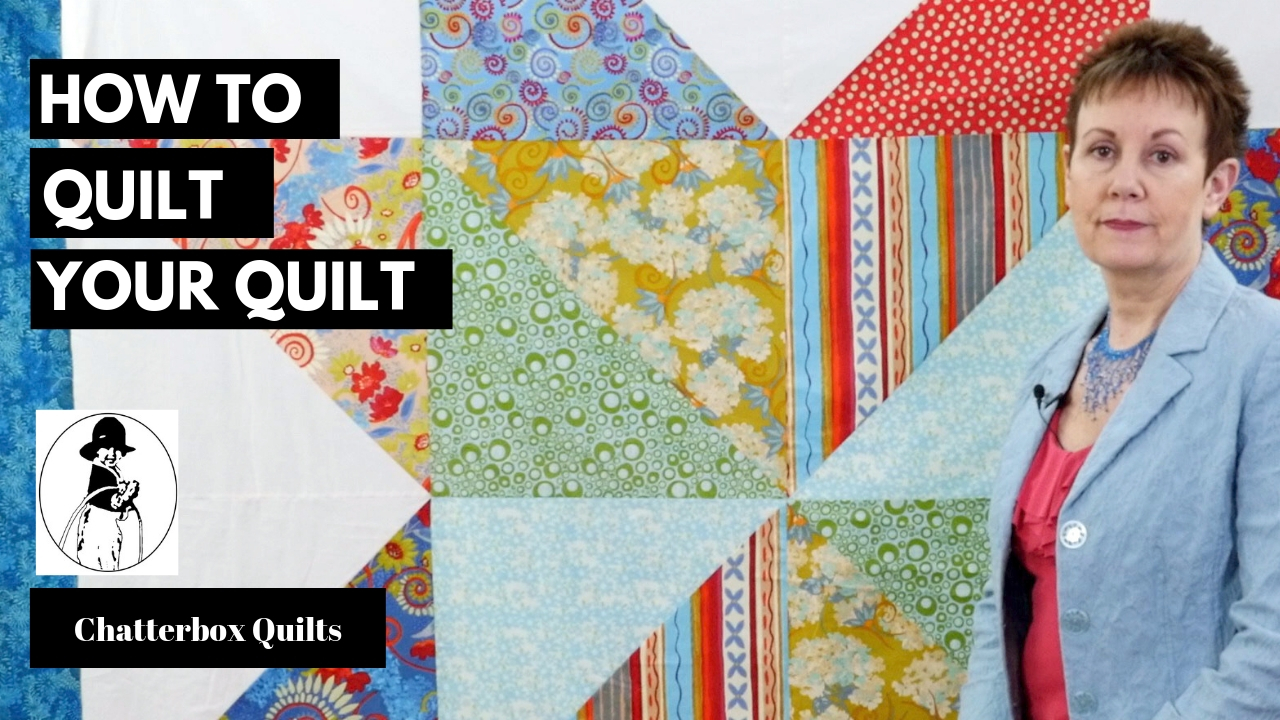
These are some ideas you can use when considering the quilt motif to be used in your next quilt project. What are the things you consider when choosing a quilt motif for your quilts? Leave a comment below to let me know.
Creatively,
Download the free Get Out of the Ditch! guide to learn how to start free motion quilting by clicking here.
P.S. Are you serious about improving your quilting? Do you want to connect with other committed quilters in a supportive, safe environment? If you answered “yes” to these questions, you need to join The Quilter’s Way. The Quilter’s Way is the only quilting membership site that includes both training and an active, supportive online community. Don’t wait another day! Join now.
P.P.S. Did you know that you can sign up to receive emails full of FREE quilting goodness? Click here to receive FREE content directly in your email inbox every few weeks from Chatterbox Quilts. I know you'll be glad you did!
P.S. I am an Amazon affiliate and, if you purchase items by clicking through the links in this post, I will receive a small amount of commission. This doesn’t cost you any more $$$, but helps me to continue creating free content for you. Thanks!

Learning From Gammill Quilt Artist, Sharon Blackmore
I recently had the opportunity to interview Gammill Quilt Artist and long arm quilter extraordinaire, Sharon Blackmore of Love Shack Quilts, Sharon is a local long arm quilter, specializing in custom quilting, and is the host of the Prairie Quilt Militia and How do I Quilt This? Facebook group.

Sharon has been free motion quilting for about 20 years and long arm quilting (always on a Gammill) for about 12 of those years. Her secret to her amazing quilting is that she quilts every day. Yes, practice definitely makes progress towards perfection!
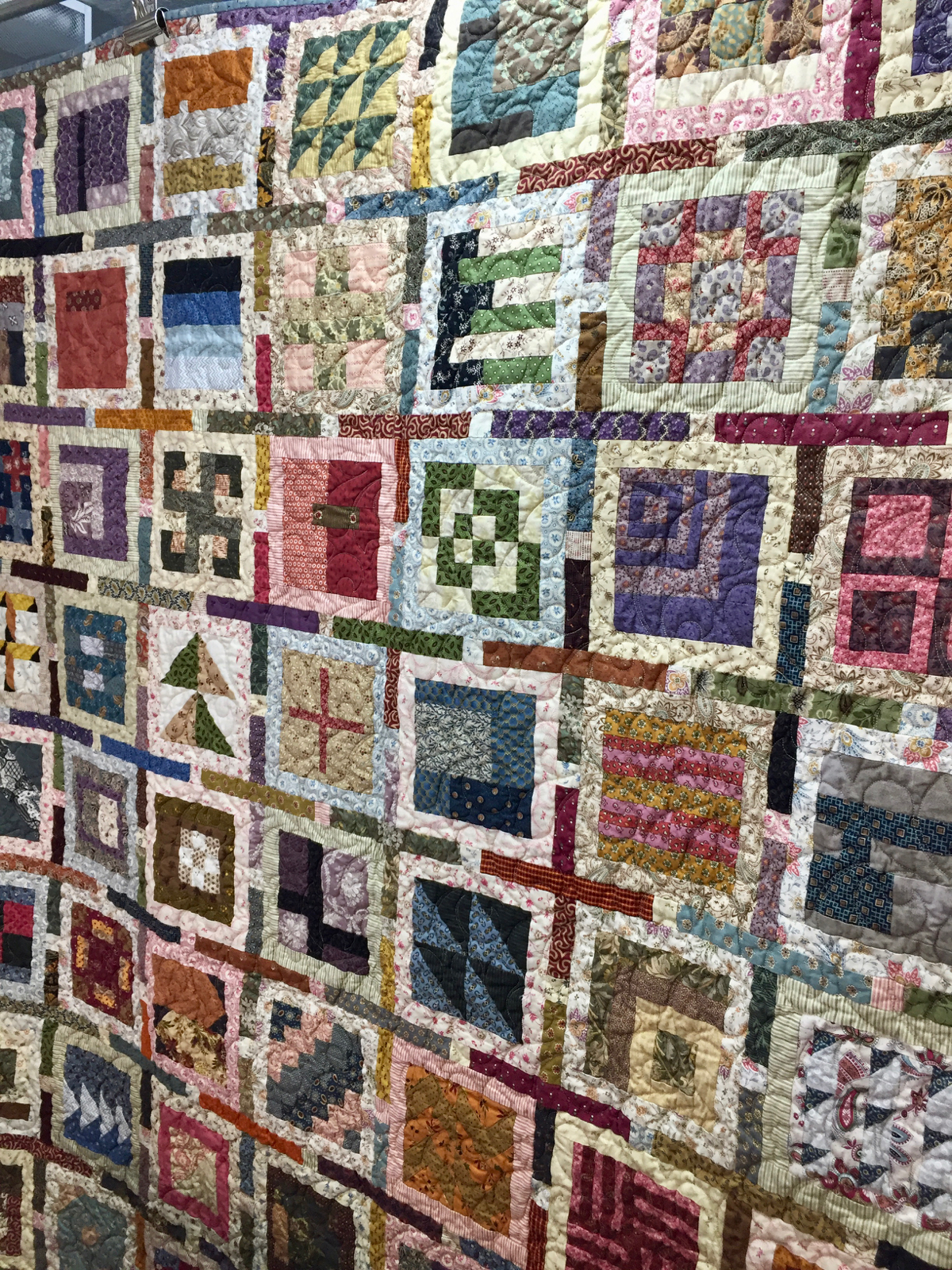
Sharon loves to challenge herself and this is also how she has improved her skills over the years. She believes that it’s important to challenge yourself and try projects outside your comfort zone to improve your quilting skills. Recently she has been quilting on leather and cork and the results are incredible!
As a Gammill Quilt Artist, Sharon has been teaching in Canada and the US on the Quilting with Confidence tour. Sharon loves teaching and appreciates the opportunity to learn from the other Gammill insructors on the tour.
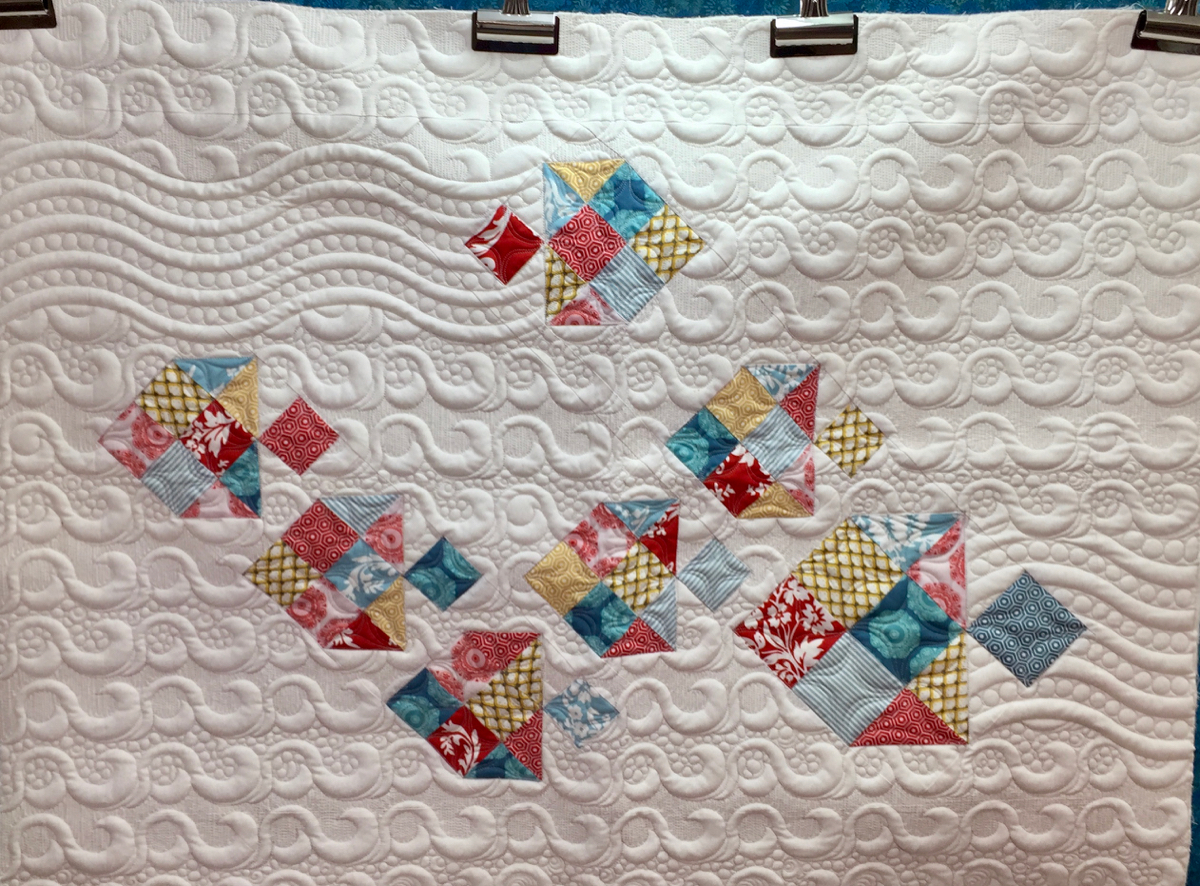
The Rebel, designed and quilted by Sharon Blackmore
Click on the image below to learn more about Sharon and her quilting journey.

After we filmed this interview, Sharon and I recorded several more videos where Sharon shared quilting tips and advice on free motion quilting and went in-depth on how she quilted several of her quilts. These videos are available exclusively for members of The Quilter’s Way. Not yet a member, check it out here.
Click here to learn more about the Prairie Quilt Militia and the How do I Quilt This? groups.
Creatively,
P.S. Are you serious about improving your quilting? Do you want to connect with other committed quilters in a supportive, safe environment? If you answered “yes” to these questions, you need to join The Quilter’s Way. The Quilter’s Way is the only quilting membership site that includes both training and an active, supportive online community. Don’t wait another day! Join now.
P.P.S. Did you know that you can sign up to receive emails full of FREE quilting goodness? Click here to receive FREE content directly in your email inbox every few weeks from Chatterbox Quilts. I know you'll be glad you did!
P.S. I am an Amazon affiliate and, if you purchase items by clicking through the links in this post, I will receive a small amount of commission. This doesn’t cost you any more $$$, but helps me to continue creating free content for you. Thanks!

Pillowcase Method to Finishing a Quilt
Do you use the pillowcase method to finish your quilt projects? Do you know about the pillowcase method? If you don’t, I’m going to tell you all about it and you are going to love this easy way to finish smaller projects.
The pillowcase method is a way to finish your quilts without binding them. Yes, you know I hate binding, so this is one of my go-to techniques for avoiding it! You’ll need:
Your quilt top
Batting cut to the size of your quilt top
Backing cut to the size of your quilt top
No binding strips!
You are going to layer the 3 parts of your quilt as follows, from the bottom up:
Batting
Quilt top, right side up
Backing, wrong side up
Pin these 3 layers together around the raw edges, leaving a gap so you can turn it right side out later on. The size of the gap depends on the size of your project: a 3” to 4” is okay for most small to medium size projects. Leave a larger unsewn area is you are working on a bigger project.
After pinning the 3 layers together, sew around the outside of the sandwich with a ¼” seam, remembering to leave that unsewn gap for turning. I like to use a walking foot to do this. Clip off the corners and turn the project right side out, pushing out the corners (I like to use That Purple Thang to do this). Hand sew the opening closed and your project is now ready for quilting.
For detailed instructions, click on the image below.

Have you ever used the pillowcase method before? If so, let me know your results in the Comments below.
Creatively,
Download the free Get Out of the Ditch! guide to learn how to start free motion quilting by clicking here.
P.S. Are you serious about improving your quilting? Do you want to connect with other committed quilters in a supportive, safe environment? If you answered “yes” to these questions, you need to join The Quilter’s Way. The Quilter’s Way is the only quilting membership site that includes both training and an active, supportive online community. Don’t wait another day! Join now.
P.P.S. Did you know that you can sign up to receive emails full of FREE quilting goodness? Click here to receive FREE content directly in your email inbox every few weeks from Chatterbox Quilts. I know you'll be glad you did!
P.S. I am an Amazon affiliate and, if you purchase items by clicking through the links in this post, I will receive a small amount of commission. This doesn’t cost you any more $$$, but helps me to continue creating free content for you. Thanks!

Easy Appliqué Pincushion Tutorial
If you’ve never made a pincushion before, you’ll want to keep reading. This project is great for using up scrap fabrics and for dipping your toes into fusible web appliqué. It doesn’t take long to make at all, so it’s a perfect “gotta have it done in an hour” gift.

If you have never tried this easy form of appliqué and want complete instructions on how to do it, you’ll definitely want to check out my course, Fusible Web Appliqué Essentials. It goes step-by-step through the whole process of making a fusible web appliqué project. (Or join The Quilter’s Way where this course is included free with your membership).
Now back to the pincushion project. Here’s what you’ll need:
Two charm squares – one for the top and one for the backing
An appliqué shape that is backed with fusible web or you can use a glue stick to adhere it to the top
Perle cotton or similar heavy thread and a long, thick needle
Polyester fill or similar filling
Usual sewing supplies

Once you’ve assembled all your materials, starch the two charm squares so they are stiff. This makes them easier to work with.

Fuse or glue the appliqué to the top charm square. Finish the appliqué edges by stitching with your chosen stitch. I like to use a narrow zigzag.
Note: You might need a fabric stabilizer underneath the fabric, depending on the denseness of the stitch you have selected.
Place the top and back charm squares right sides together and stitch around them with a ¼” seam, leaving an opening on one side to turn. Clip the corners and turn it right side out, poking out the corners (I like to use That Purple Thang to do this).
Stuff with Polyfil or similar stuffing until very firm. Hand stitch the opening closed.

If you like the look of your pincushion just as it is, you can stop here, but if you want to give it a bit more definition, read on.
To give it a pincushion shape, I like to stitch through the centre of the pincushion and out the back several ties, pulling the thread taut each time. Use two lengths of perle cotton for this (a regular weight thread might break - ask me how I know!). Knot the thread and starting on the back, push the needle through to the top. Take a small stitch and then go back down to the back, pulling the thread taut. You could add a button on top while doing this if you wished. Do this 3 times and then knot the thread in the back.
Your pincushion is now done!
For a complete step-by-step tutorial on creating this pincushion, click on the image below.
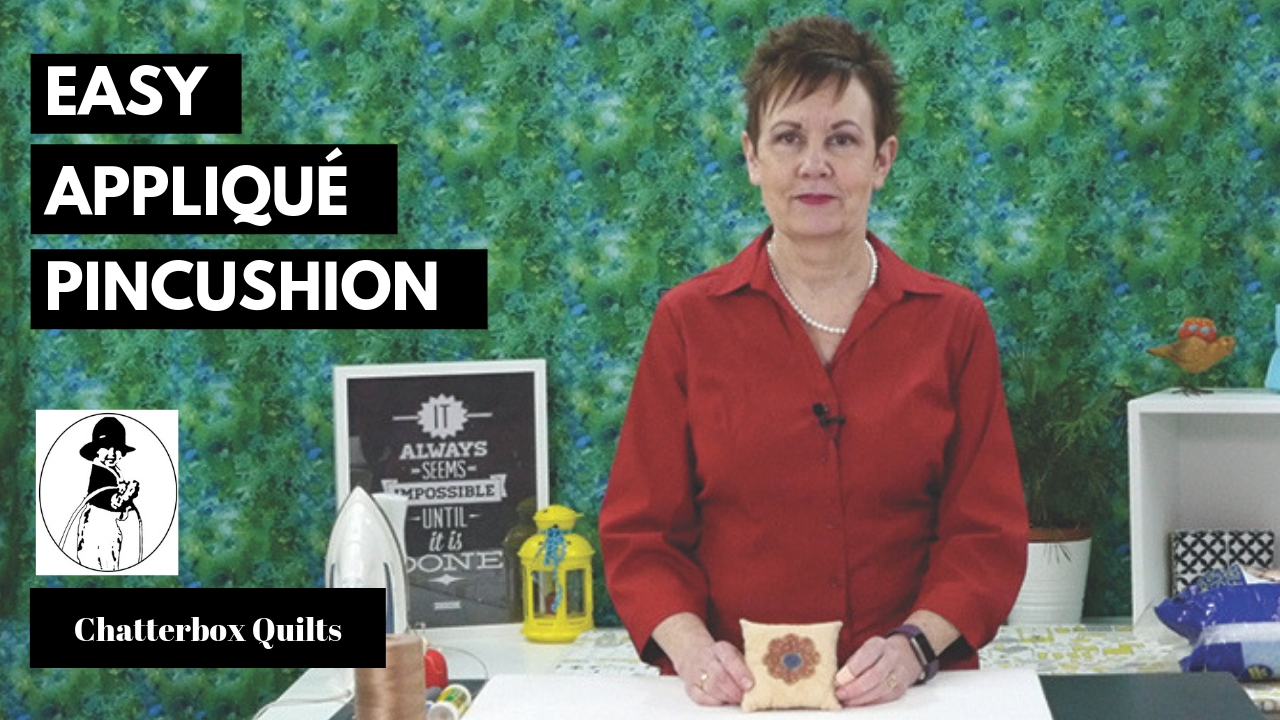
Have you ever made a pincushion before? Share your ideas and experiences in the Comments below.
Creatively,
P.S. Are you serious about improving your quilting? Do you want to connect with other committed quilters in a supportive, safe environment? If you answered “yes” to these questions, you need to join The Quilter’s Way. The Quilter’s Way is the only quilting membership site that includes both training and an active, supportive online community. Don’t wait another day! Join now.
P.P.S. Did you know that you can sign up to receive emails full of FREE quilting goodness? Click here to receive FREE content directly in your email inbox every few weeks from Chatterbox Quilts. I know you'll be glad you did!
P.S. I am an Amazon affiliate and, if you purchase items by clicking through the links in this post ,I will receive a small amount of commission. This doesn’t cost you any more $$$, but helps me to continue creating free content for you. Thanks!
Welcome! I’m Kim Jamieson-Hirst of Chatterbox Quilts, a YouTube creator and host of The Quilter’s Way. I believe that quilting is more than just a 1/4” seam and that practice makes improvement and you are improving every day!
Contact me at kjh@chatterboxquilts.com.





Want to improve your quilting and have fun doing it? Join The Quilter's Way, a private online membership site that creates successful quilters.

Check out my favourite books and tools.
As an Amazon Associate I earn from qualifying purchases from links that you may find on the Chatterbox Quilts’ website.