
CHATTERBOX QUILTS’ BLOG
Helping Quilters Learn and Improve
What Should You Pay for a Vintage Sewing Machine
I've created the Pricing Guide for Vintage Sewing Machines that will help you answer the question, “Is this a good price to pay for a vintage sewing machine?”. This PDF download is full of information to help you determine what price you should pay when you find your perfect machine(s). While I refer to SINGER® sewing machines in this FREE guide, this information is applicable to any brand of vintage sewing machine.
PLEASE NOTE THAT CHATTERBOX QUILTS DOES NOT PROVIDE FREE EVALUATIONS ON VINTAGE SEWING MACHINES.
Caveat Emptor or Buyer Beware! I'm sure you've heard this expression before and it is so true when you are shopping for a vintage sewing machine.
When I'm looking at listings online I've noticed that there usually isn't a very good description of the machine. Most sellers don't even know the make of the machine, let alone the model. I have noticed this especially when looking at Singer Featherweight models: a 221 described as a 222 or vice versa. While you might not think that this makes a big difference when it comes to price, I can assure you that it does. Let me explain further.
There is often some confusion about what exactly a SINGER® Featherweight is. SINGER® manufactured two models of the SINGER® Featherweight: the 221 and the 222K. Both of these machines look very similar, but there are significant differences. There is also a SINGER® 301/301A model, which some consider a “sister” to the 221 and 222K Featherweight models. It’s important to understand how these machines vary from one another, as their selling prices are vastly different.
Let’s take a look at these three models so you have a clear understanding of each of them.
The SINGER® 221 was first manufactured by SINGER® in 1933. These little guys look like a child’s toy, but they stitch like a regular sewing machine. You can find the SINGER® 221 models in various colours: white (turquoise), tan or black (shiny or very few in crinkle), with the most common models being the shiny black ones. They come in a compact case that has efficient storage for the machine, the foot pedal, the attachments and sometimes the oil can. Their appeal, besides their adorable appearance, is their portability and the great stitch quality they produce.
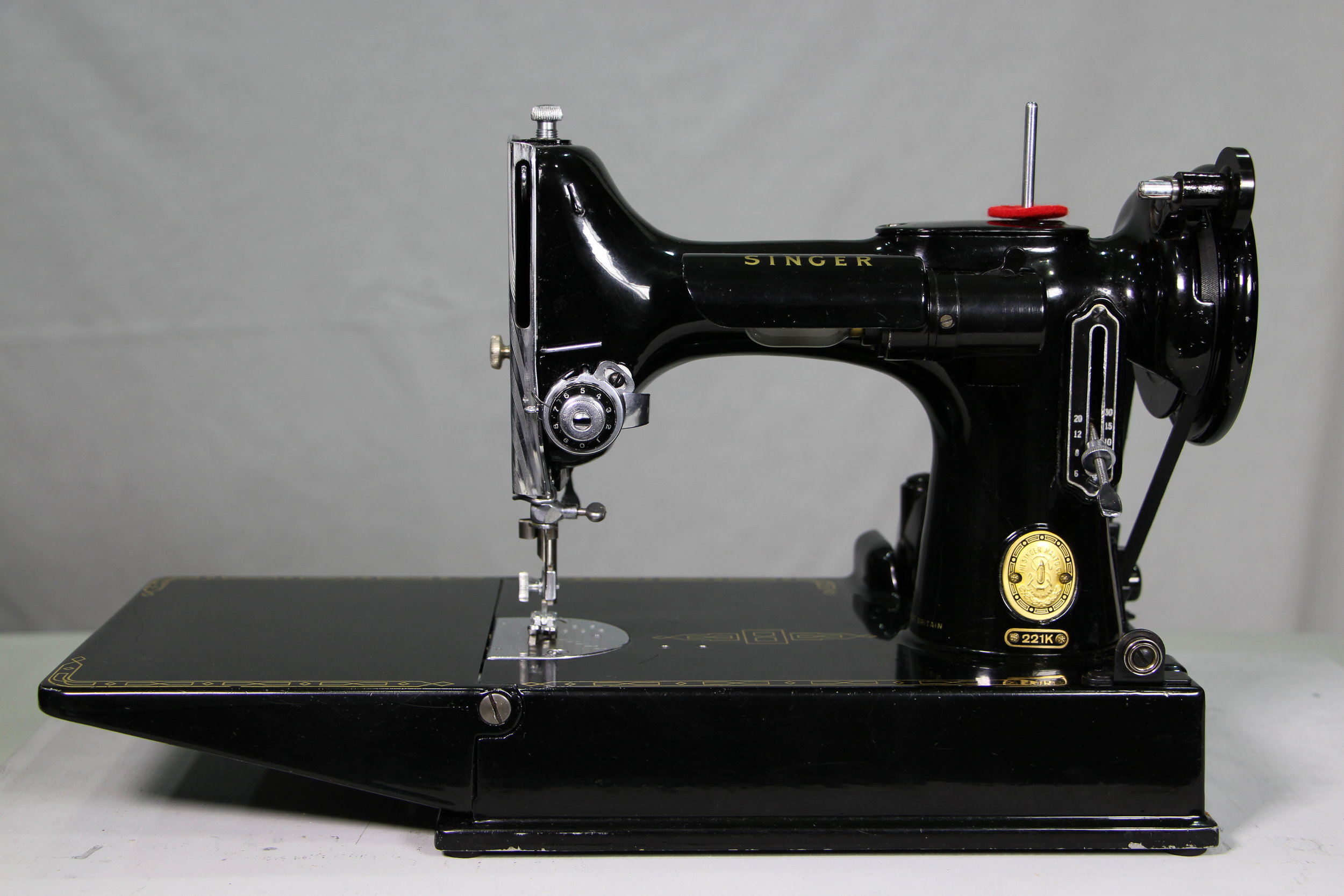
SINGER®221
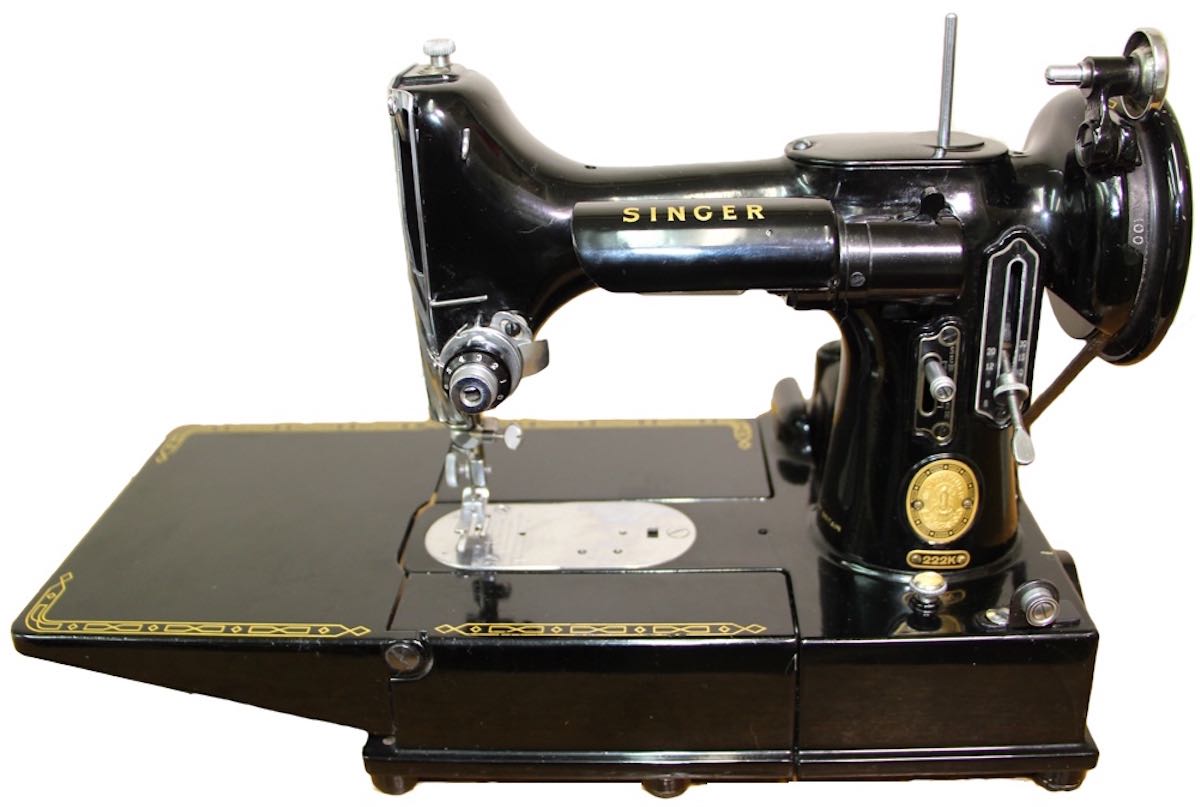
SINGER® 222K
The SINGER® 222K model looks very similar, and is often mistaken for, the SINGER® 221 model. There are several important distinctions between the two models. The 222K had a very limited production run from 1953 until 1961. The 222K has a removable bed which turns it into a free arm sewing machine and the feed dogs can be dropped. The 222K model is also a smidge taller than the 221 model, remember those dropping feed dogs, so it doesn’t really fit in a 221 case. SINGER® 222K models were produced in black only and are highly desirable – and expensive, due to their features and limited production run.
While there were only two true models of the SINGER® Featherweight sewing machine manufactured, some people consider the SINGER® 301/301A to be bigger sisters to the 221 and 222K models. I think that’s interesting considering the difference in the sizes of the machines. They really don’t look alike, do they? It’s true that the 301 or 301A uses the same bobbin as the 221 and 222K models, but they aren’t Featherweight sewing machines. There are some other differences with the SINGER® 301/301A sewing machines. These models were the first slant needle sewing machines SINGER® manufactured and the first machines to be sold as a portable in a cabinet. Yes, they are portable, like the SINGER® Featherweights, but the 301/301A are still not Featherweights! The 301/301A models were manufactured between 1951 and 1957 in the Anderson, South Carolina, USA plant.

SINGER® 301A
While these machines all have some similarities, where they really differ is in the prices that you’ll have to pay to acquire them. You need to be knowledgeable about these machines when you are looking at purchasing or selling one of them. The SINGER® Featherweights sell for much more money than the other SINGER® models – in the hundreds, if not thousands of dollars. The 301/301A models are substantially less expensive than either of the Featherweight models, with current prices being $150. In contrast, the average current price for a SINGER® 221 Featherweight is $350.00. The rarer, and even more desirable, SINGER® 222K is currently selling for between $800 and $2000. These are average prices in my area, but the relationship between the prices for the different models will be the same in your part of the world.
If you already have any of these models and got them for less than these prices, pat yourself on the back! If you are considering buying one of these machines, you’ll definitely need to carefully check the condition of the machine and what is included in it before you hand over hundreds of dollars. This isn’t a $15 purchase!
Click here for a video where I compare the Featherweights to another popular vintage sewing machine, the Singer 301.
You can see how the prices can differ greatly between vintage sewing machine models. You need to know what the average prices are for various machines and I've done this work for you.
I've created the Pricing Guides for Vintage Sewing Machines that will help you answer the question, “Is this a good price to pay for a vintage sewing machine?” for both buyers and sellers. These PDF downloads are full of information to help you determine what price you should pay when you are a buyer or what price to set if you are seller. While I refer to SINGER® sewing machines in these FREE guides, this information is applicable to any brand of vintage sewing machine. Download the FREE Pricing Guides for Vintage Sewing Machines printable right away.
I know that you will find these guides extremely useful but you will have to do a bit of work too. Since it’s impossible for me to know which model of vintage sewing machine you are considering buying or selling, you’ll have to do a bit of research into what a typical price point is in your area for that particular model. There can be a wide range of prices even for the same model.
Download the Pricing Guides for Vintage Sewing Machines now so you so you’ll have it handy when you’re shopping for or selling your vintage sewing machine.
If you have a friend who would be interested in this information, please share this blog post with them by clicking on the "Share" icon below.
Creatively,


Telecast Thursday - First Projects on the Janome 500E
I've had a chance to play a bit with the Janome 500E and wanted to share my first projects with you. There isn't much of a learning curve with this machine, although I did have to read the manual to learn how to set up the stabilizer and fabric in the appropriate hoop. My manual is always right by the machine so I can reference it when I'm working on a project. Do you know where your embroidery machine manual is?
For these first projects I accessed the built-in designs on the Janome 500E and played with them a bit. It's always a good idea to read the manual and then practise a few designs to become familiar with the parts and operation of the machine.
You can watch the video below or on my Youtube channel to see how these first attempts turned out.
Subscribe to my YouTube channel to receive automatic notifications when new videos are posted. If you like what you see, please share my videos with your fellow creatives.
I was pleased at my first attempt at machine embroidery and the Janome 500E did a super job! I'm looking forward to lots more playing with this machine.
Do you have any tips for me when doing machine embroidery? What type of threads and stabilizer do you like to use? Let me know in the comments below.
Creatively,

This blogpost contains affiliate links and I will receive a small amount of compensation if you purchase by clicking through these links. Thanks for supporting Chatterbox Quilts.

What to Consider When Buying a Treadle Sewing Machine - Singer 66
I often hear people say that a treadle machine doesn't work, when often there is only one small, but significant, part that would enable the machine to run: the belt. Most of the belts on these machines were made of leather, which, over time, would wear, become brittle and eventually break, rendering the machine "unuseable". This is a simple and inexpensive fix as new treadle belts can be purchased in either leather or rubber, for just a few dollars. Put on the new belt and you're ready to start stitching.
I'm sharing a video about my Singer 66 treadle sewing machine. If you're not familiar with a treadle sewing machine, they are the old vintage ones that don't have a motor and are foot powered.
I often hear people say that a treadle machine doesn't work, when often there is only one small, but significant, part that would enable the machine to run: the belt. Most of the belts on these machines were made of leather, which, over time, would wear, become brittle and eventually break, rendering the machine "unuseable". This is a simple and inexpensive fix as new treadle belts can be purchased in either leather or rubber, for just a few dollars. Put on the new belt and you're ready to start stitching.
To learn about my Singer 66, its treadle mechanism and what to look for when buying this type of machine, watch the video below.
If you are thinking of buying a vintage sewing machine you may be interested in my eBooks for buyers (click here). If you are thinking of selling your machine you may be interested in my How To Sell a Vintage Sewing Machine eBook.
Do you have a treadle sewing machine in your studio? Let me know all about it in the comments below,
Creatively,


Telecast Thursday - First Look at the Janome 500E

Happy Thanksgiving to my American readers and viewers! I hope you're enjoying a yummy turkey dinner with family and friends.
This week on Telecast Thursday, I'm taking a look at the Janome Memory Craft 500E embroidery machine.
I've never had, nor even looked at, an embroidery machine before, preferring the look of hand embroidery, but I must say that I am seeing lots of possibilities with this machine! Did you know that besides doing amazing machine embroidery, the Janome 500E can finish the edges of your appliqué pieces? Now that's something that caught my eye!
For my initial impressions of this machine, watch the video below or on my YouTube channel.
Subscribe to my YouTube channel to receive automatic notifications when new videos are posted. If you like what you see, please share my videos with your fellow creatives.
Do you have an embroidery machine? Let me know the types of projects that you create on your machine in the comments below.
Creatively,


Thanks, Janome!
I have a big announcement: I am a Janome Artisan!
I've very excited to be partnering with Janome in creating projects and sharing information about some of their wonderful products.
I've had my Janome Horizon Memory Craft 8900 QCP (Janome 8900) for about 2 1/2 years now and really enjoy using it for my quilting and stitching. If you haven't had a chance to take a peek at some of the videos with the Janome 8900, they are in their own playlist so you can find them all in one place.

Janome Horizon Memory Craft 8900 QCP Photo courtesy of janome.com
Recently Janome Canada loaned me a Janome Artistic Edge digital cutter as well as a Janome 500E embroidery machine. These machines are both new to me and while I've worked with digital cutters before, I've never even looked at an embroidery machine! Lots of learning, but I'm very impressed with the capabilities of both these machines.

Janome Artistic Edge Photo courtesy of janomespecials.com
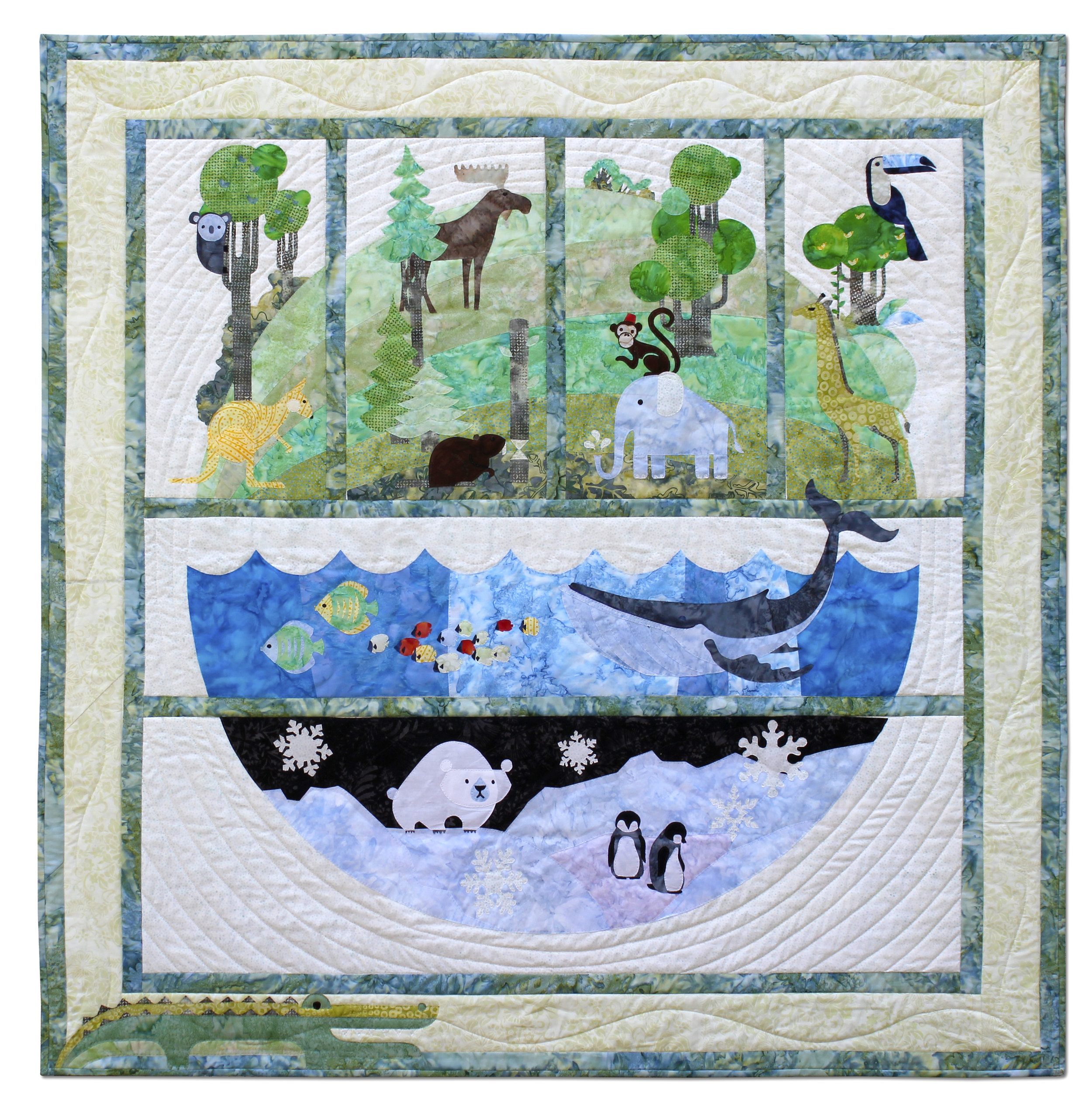
You can expect to see blogposts and videos about the Janome Artistic Edge. I'll be using it to cut some of the appliqué shapes in the One World Quilt Along since it does such an amazing job on intricate designs. If you haven't already joined us in this online quilt along, I hope you'll do so as we're having lots of fun creating this cute quilt.
I always thought that machine embroidery machines did just that - only machine embroidery. I'm finding out that they can do a lot more! I'll really looking forward to combining appliqué with machine embroidery on the Janome 500E. You can look forward to following me on my learning and creating journey with this machine.

Janome 500E Photo courtesy of janome.com
I'll be posting projects and tips in future blogposts and videos, so stay tuned for these.
If you have anything that you'd like to know about either the Janome Artistic Edge or Janome 500E, leave me a comment below and I'll do my best to help you out.
Off to do some creating!
Creatively,

Welcome! I’m Kim Jamieson-Hirst of Chatterbox Quilts, a YouTube creator and host of The Quilter’s Way. I believe that quilting is more than just a 1/4” seam and that practice makes improvement and you are improving every day!
Contact me at kjh@chatterboxquilts.com.




Want to improve your quilting and have fun doing it? Join The Quilter's Way, a private online membership site that creates successful quilters.

Check out my favourite books and tools.
As an Amazon Associate I earn from qualifying purchases from links that you may find on the Chatterbox Quilts’ website.